Entry 9 Day 56 26 November Altitude: 0 ft Distance: 13,738 km Speed: 0 knots/hr
RRS Sir David Attenborough has arrived
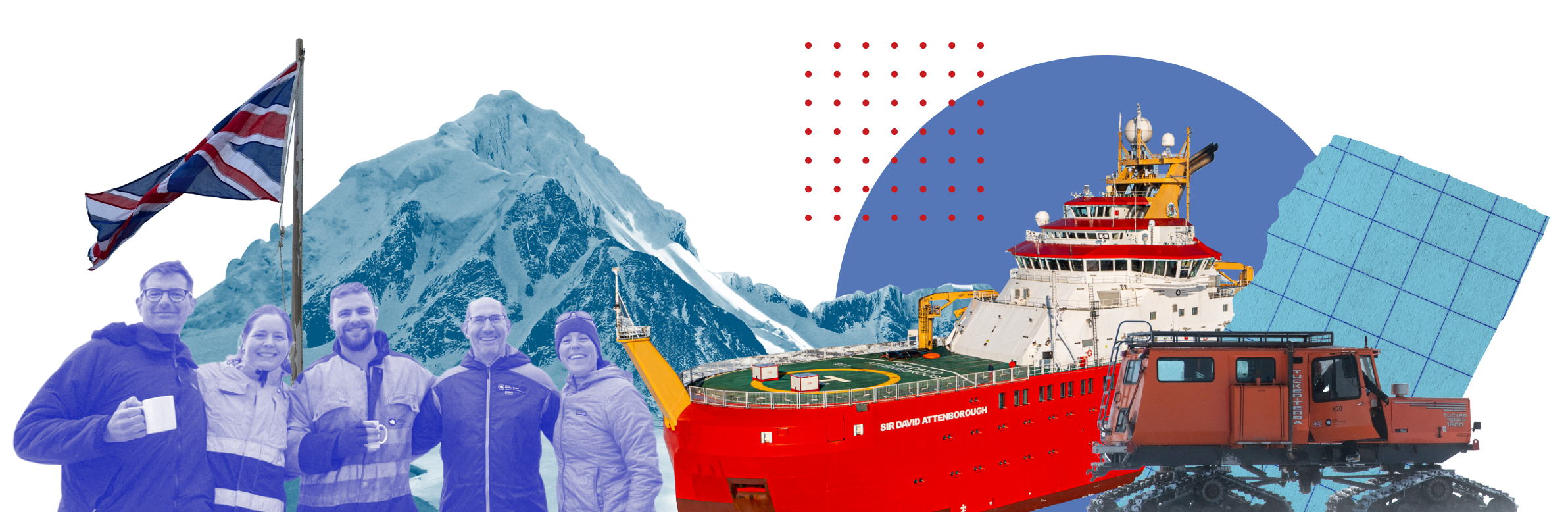
We’re back at Rothera Research Station this week to welcome our big red polar research ship back for the first time this season. The ship left the UK in mid-October, so it’s taken just over a month to make the epic journey to Rothera, with a couple of stops on the way.
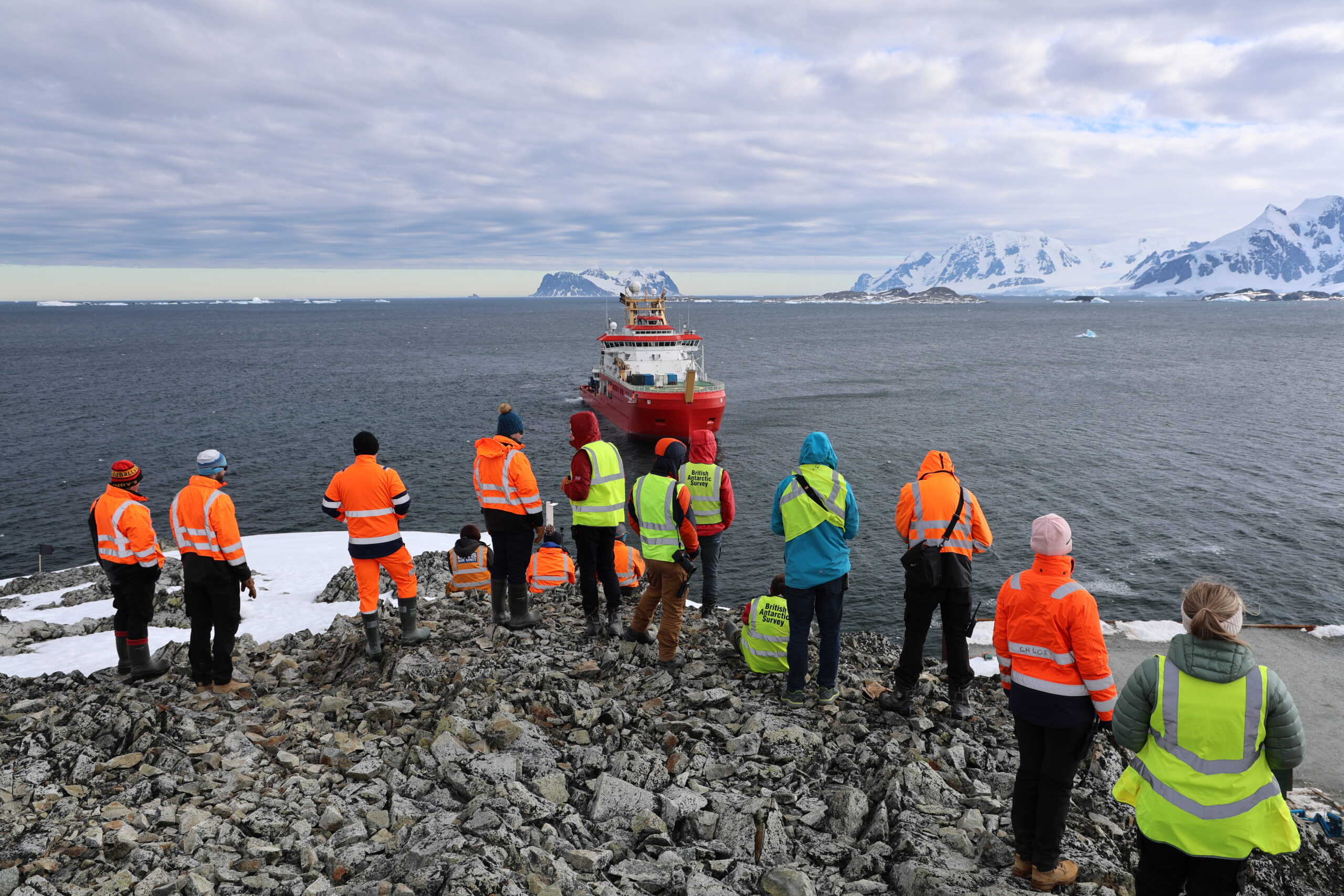
Arriving at Rothera is a huge moment for the beginning of the season of research – and for the people who have spent all winter at the station! Equipment and (very importantly!) fresh food can be unloaded, and the ship is now ready to support large scientific endeavors.
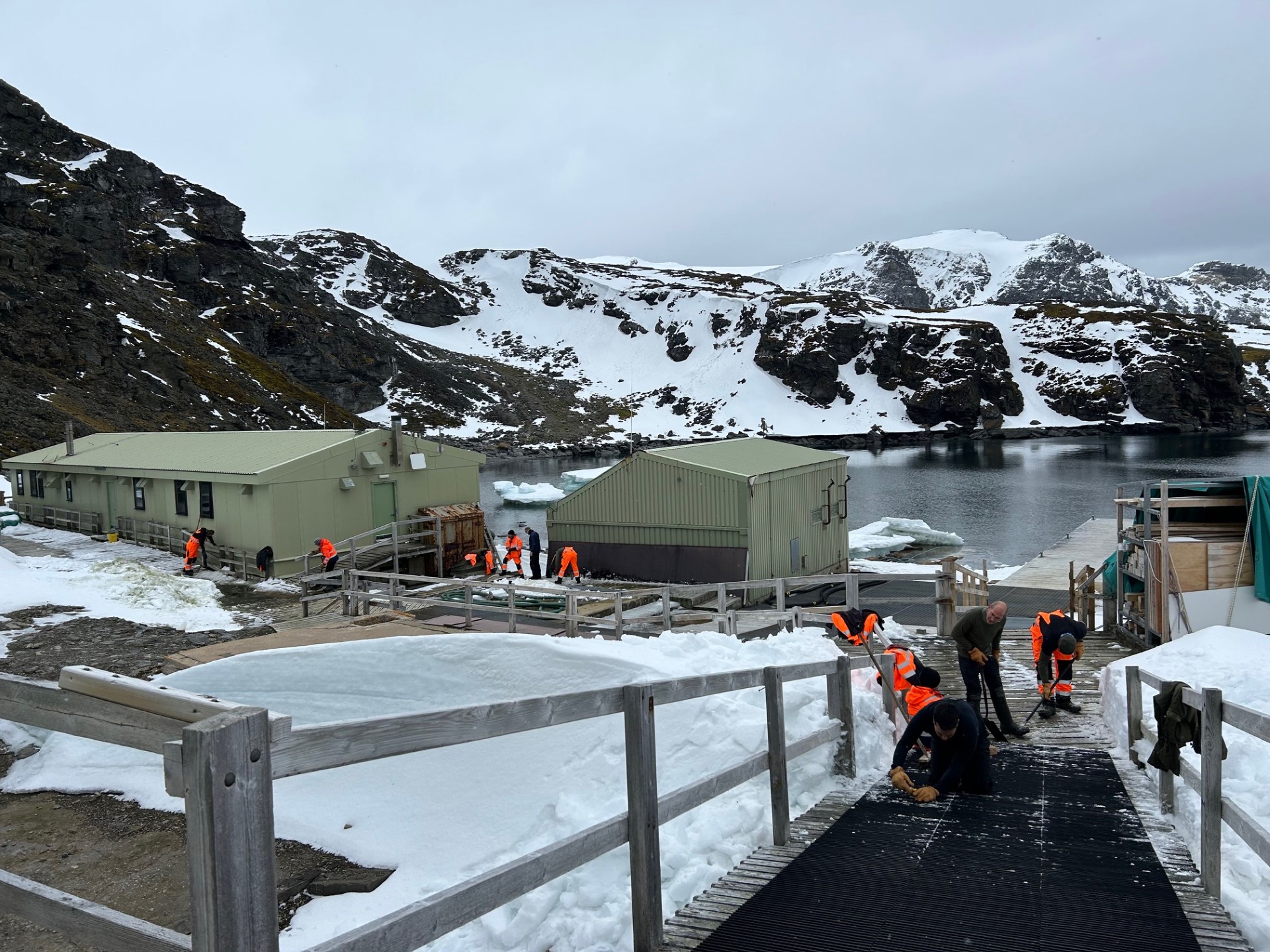
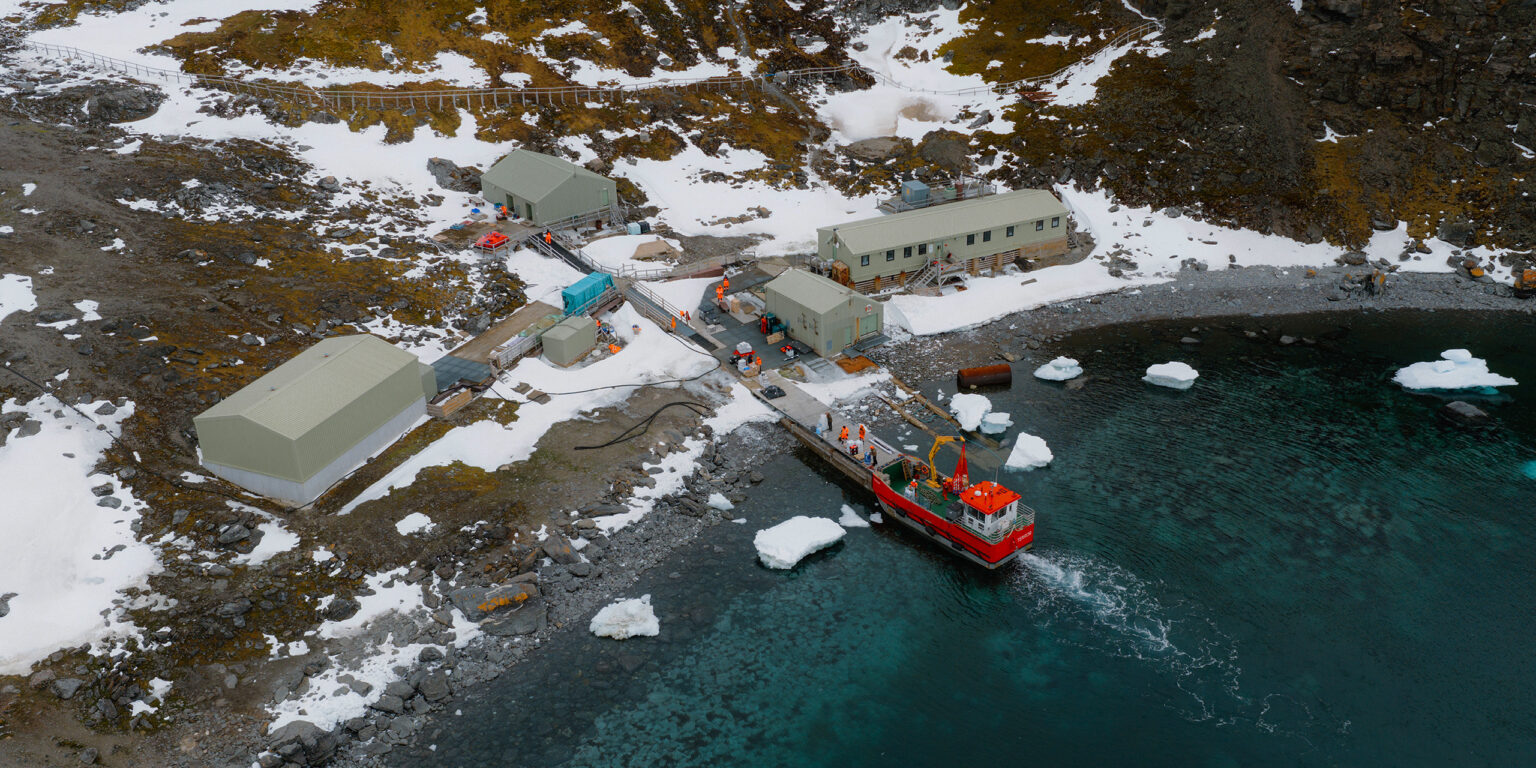
The ship has already stopped at a smallest research station, Signy, to drop off this year’s team. Signy is on the remote South Orkney Islands, 600km away from the Antarctic Peninsula.
Here are some pictures from the moment the team arrived. Can you spot RRS Sir David Attenborough’s workboat Terror?
The team hard at work, opening Signy Research Station for the season
 default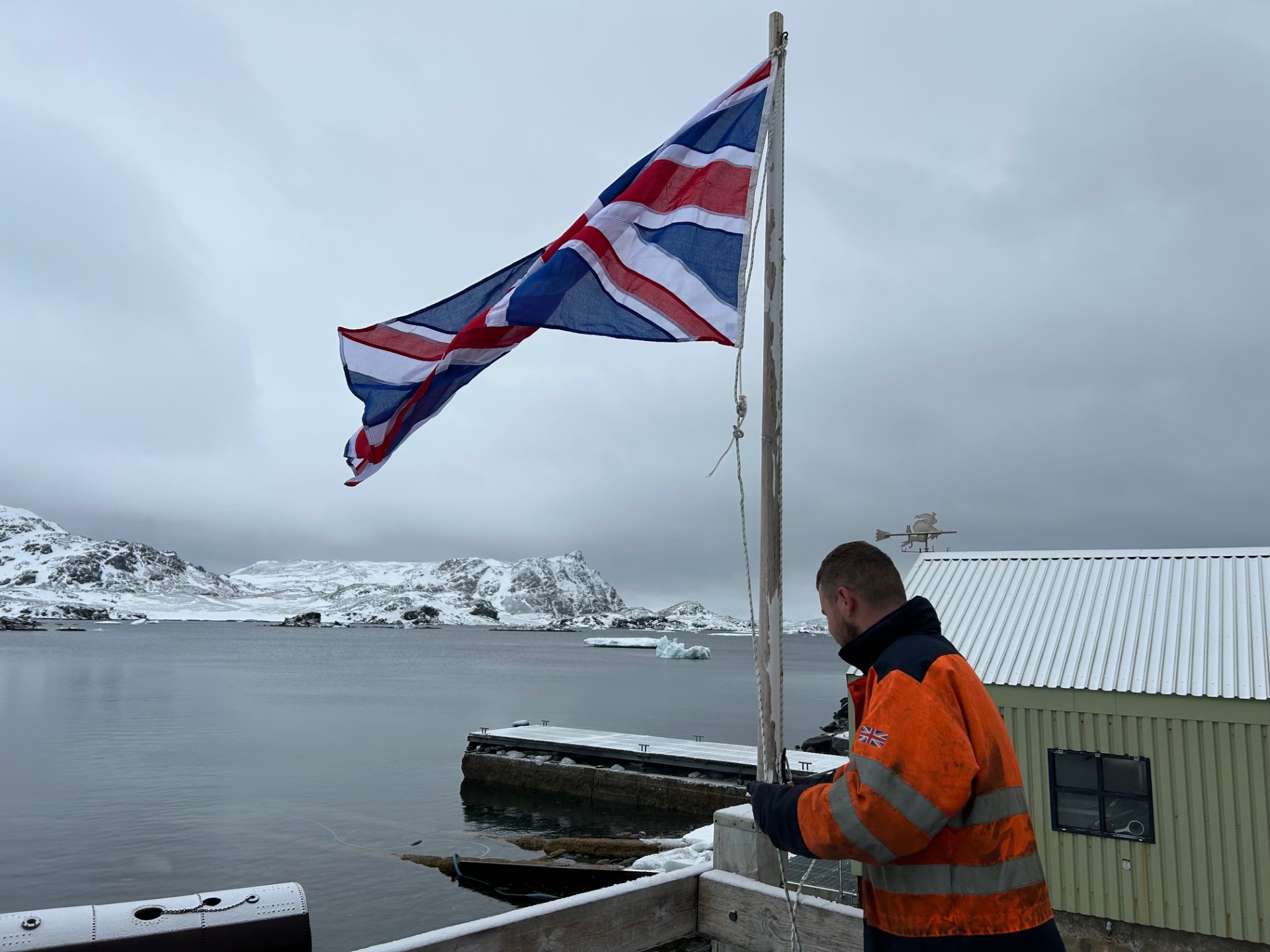
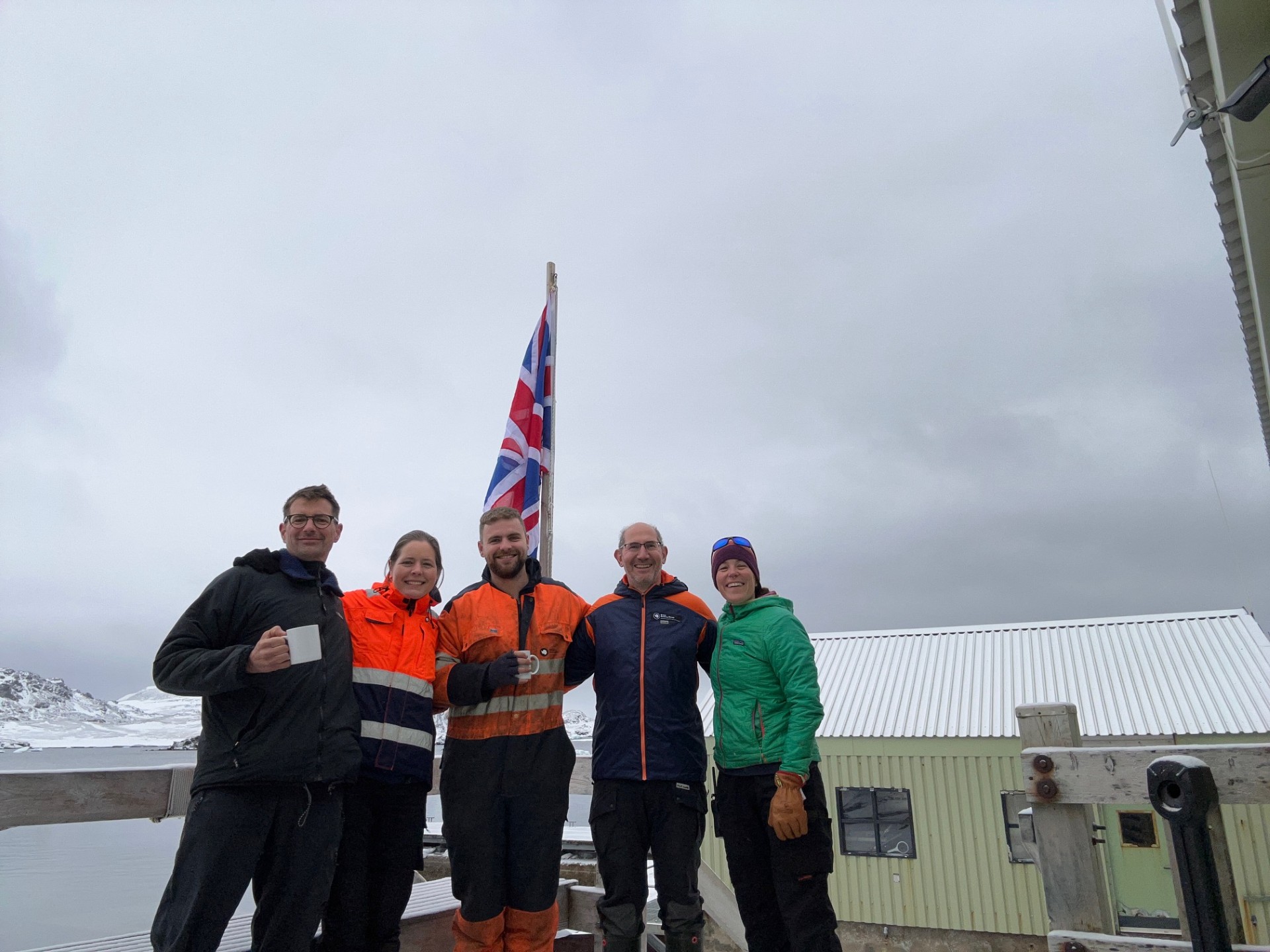
Chris raises the flag
Science at sea
The ship has got a packed schedule of science this season.
First up, after Christmas, is a project called Iron Man. Scientists will be on the ship, investigating how iron and manganese (micro-nutrients essential to marine algae) affect the Southern Ocean via the tiny animals and plants that live there. This is to help improve models that help us predict what our future climate will look like.
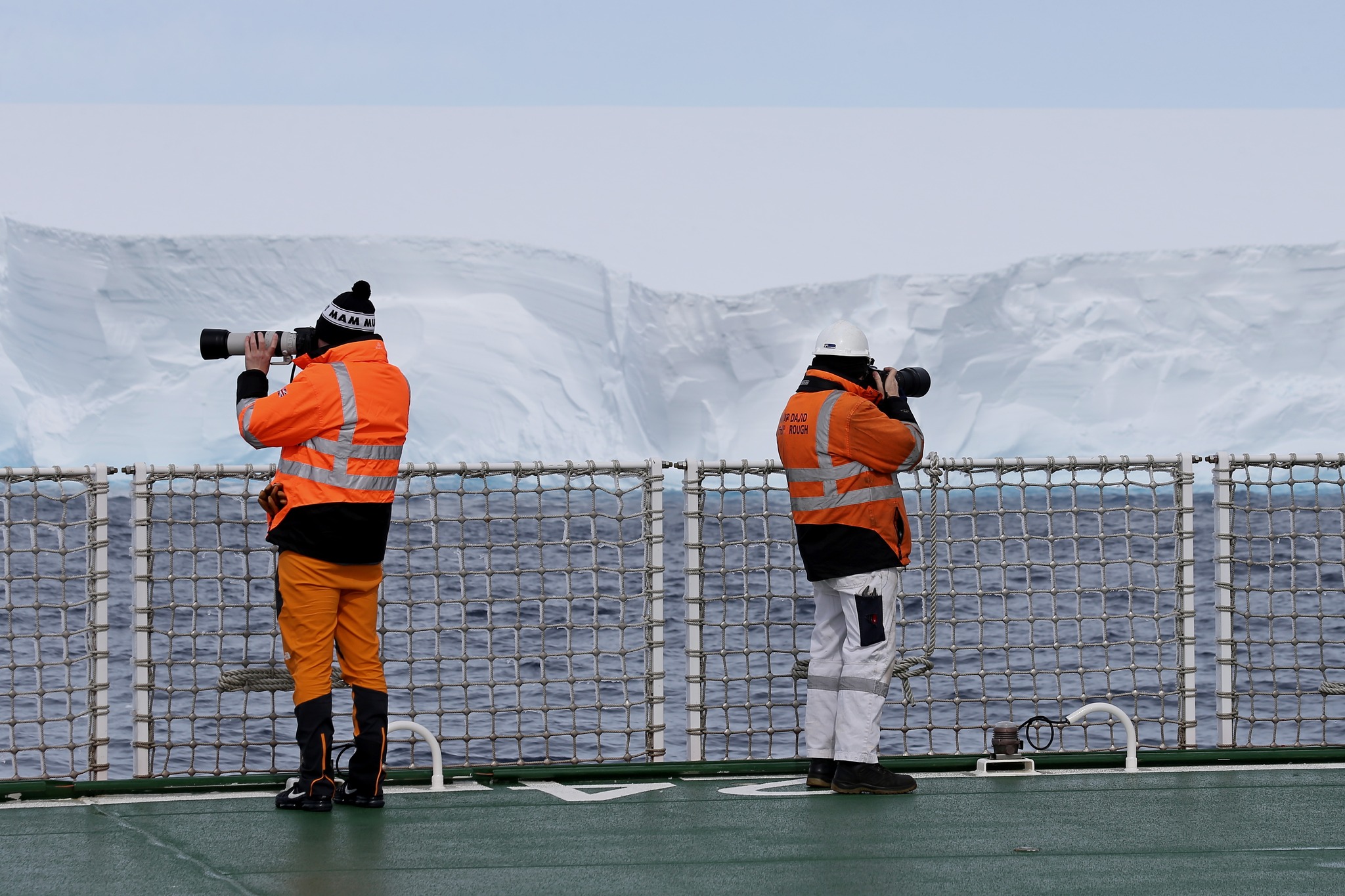
Even with a packed science schedule, there’s still time to admire the view
Next up – POLOMINTS. And we don’t mean the minty sweets! A team of researchers are investigating how glacier calving (when a chunk of ice breaks away from the end of a glacier, a slowly moving river of ice) create tsunamis under the water. These tsunamis create lots of mixing in the ocean, and scientists want to know what effect this has on the local marine ecosystem.
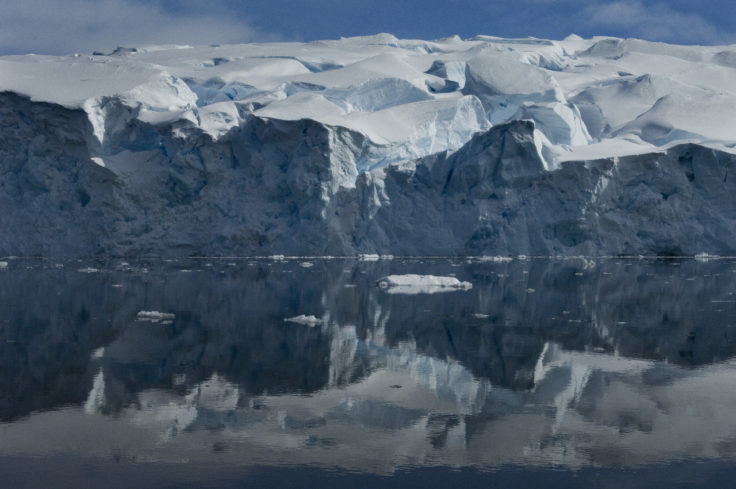
The edge of a glacier
In a first for British Antarctic Survey, researchers spent the polar midwinter on board the ship to gather some essential data for this project. We often study Antarctica in the summer, when conditions are more favourable and round-the-clock light makes science much easier. But, the way the environment works in the winter is very different. To fully understand Antarctica – and how it’s changing – we need to know what happens year-round.
We were joined by ITV News for this special research mission. If you want to learn more about science in the dark, they documented the trip here: ITV News in Antarctica. Warning – extreme jealousy very likely!
Check out these photos from this special midwinter voyage.
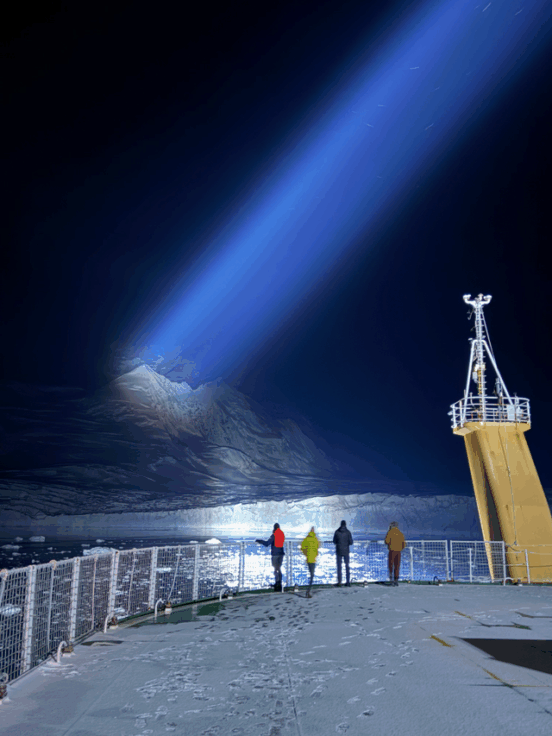 Mike Meredith
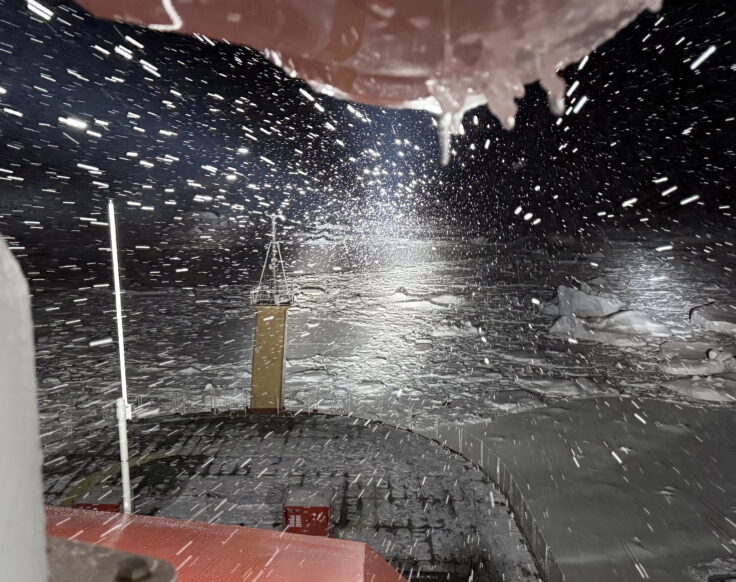 Mike Meredith
 Finishing up the big ocean science projects this season is POETS WCB (we know, our projects have some unusual names. Polar Ocean Ecosystem Time Series – Western Core Box is a bit of a mouthful though!)
This research project has been running since 1996! Scientists have returned to the same survey area (or ‘box’) each year to collect data on zooplankton and the ocean conditions in South Georgia. This gives us almost three decades worth of data, which is really important in helping us spot how and when things are changing in this precious environment. The data plays a key role in understanding how much krill there is, and how the numbers are affected by climate, fishing and predation.
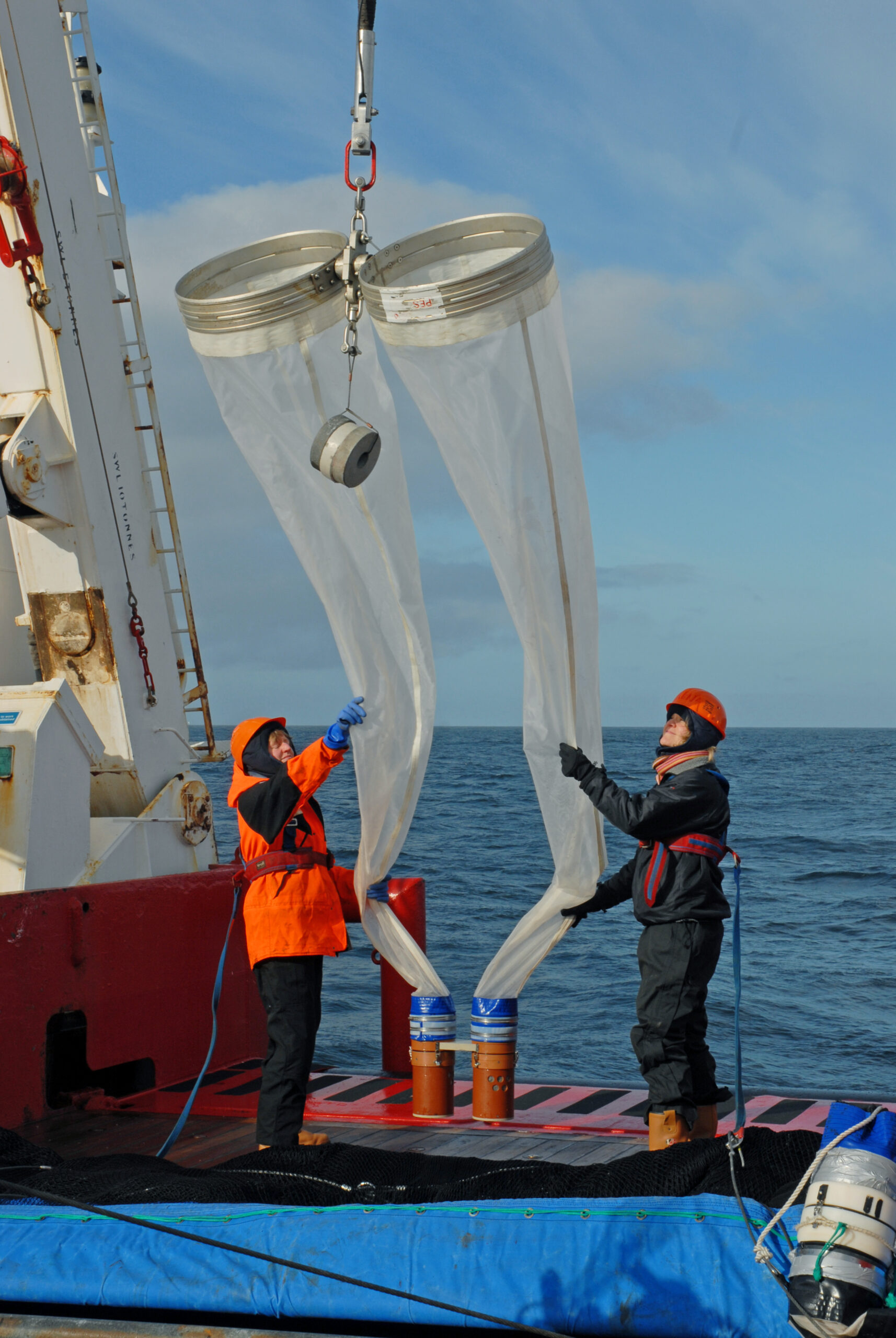
Collecting samples at sea
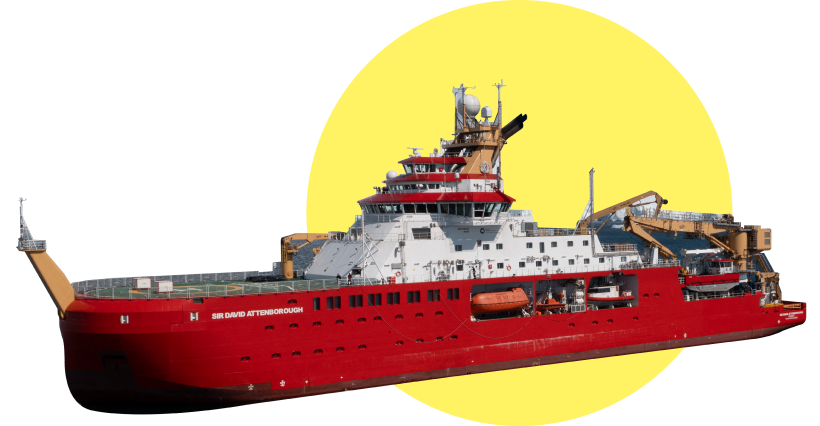
Did you join us for Ticket to Antarctica: by ship last year?
If not, you can catch up on last year’s voyage here.
Vehicles of Rothera
And now – back to land! We’re going to explore our brand-new vehicles workshop at Rothera Research Station. There’s more machinery than you’d think involved in running an Antarctic research station, and keeping the vehicles moving requires a team of hardy and inventive mechanics and engineers.
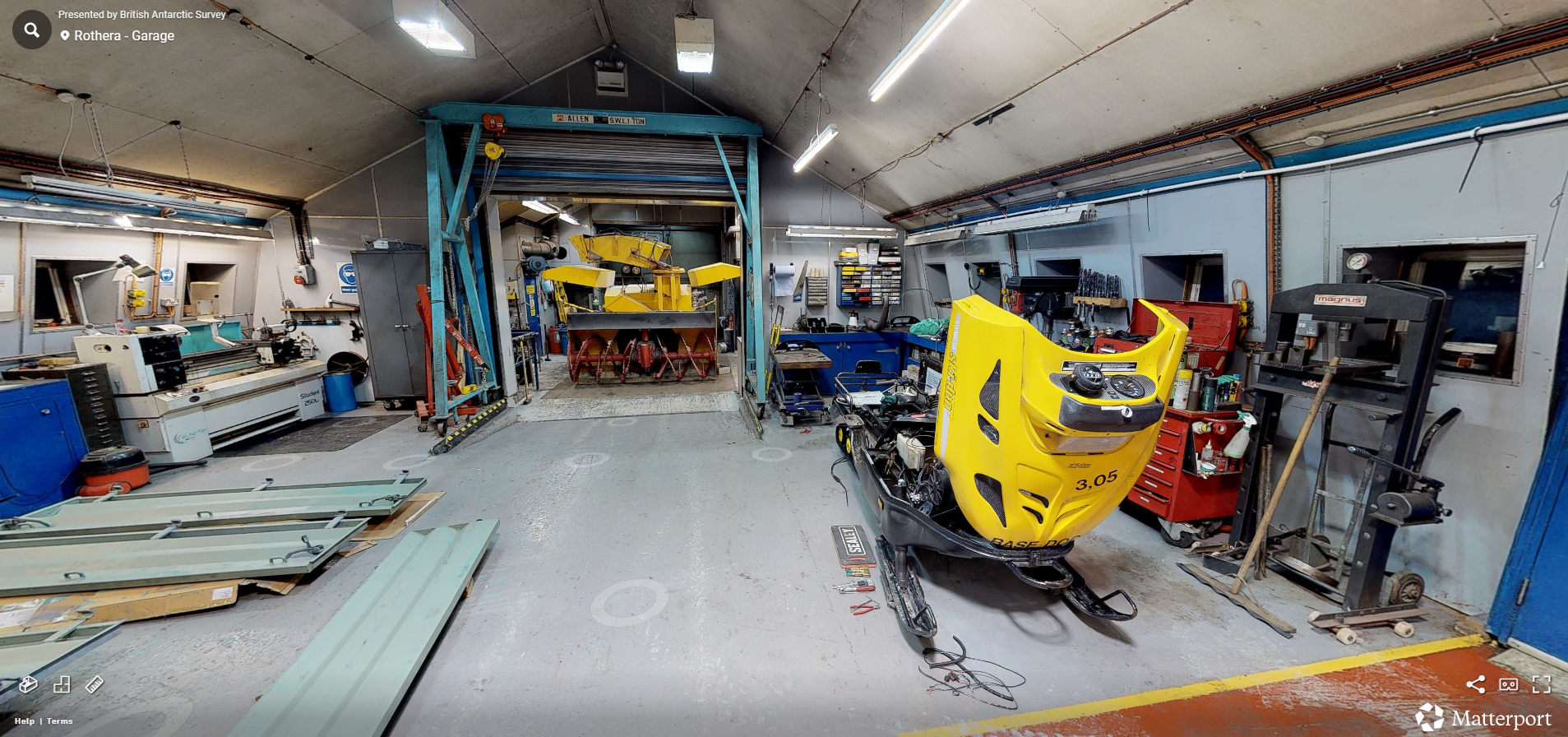
Take a peek into our vehicles workshop
Our old garage dated back to the 1970s so it was due an upgrade. The workshop wasn’t big enough for some of our new vehicles – so maintenance had to take place outside. That’s a tough gig!
The larger layout allows engineers to work on multiple vehicles side-by-side, rather than the slower, end-to-end method used up to now. With the old garage, the team had to move all the vehicles outside every time they have needed to remove one, once work on it has been completed.
Our new workshop is a much more comfortable space for our mechanics and engineers – it’s even heated, something which is good for the vehicles, and the people fixing them!
“When you bring a vehicle in from the outside during the winter or after a big snowstorm, it’s important to thaw it properly, otherwise the water or ice can cause electrical faults. The new building will have hot air tubes that act like a large hairdryer. We can move them over the vehicle and melt it out much more quickly than before.”
Andrew Warner, Vehicles Engineering Manager
Did you know?
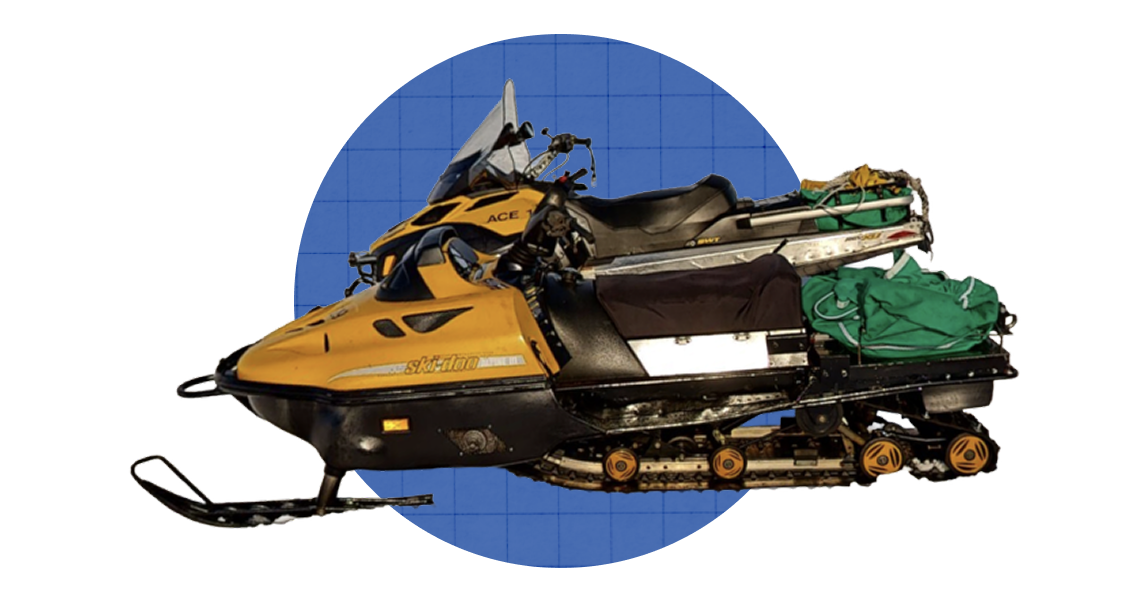
Skidoos have a skis at the front for steering. On smooth snow, they can reach speeds of up to 50mph!
The new Discovery Building and the vehicles workshop inside it (it is a huge building!) have been built as part of our long-term modernisation programme in Antarctica. This is all good for the future of polar science!
Want to learn more about our new vehicles workshop? Check out this edition of the BAS Long Read: Behind the big blue door: The workshop helping to drive Antarctic science
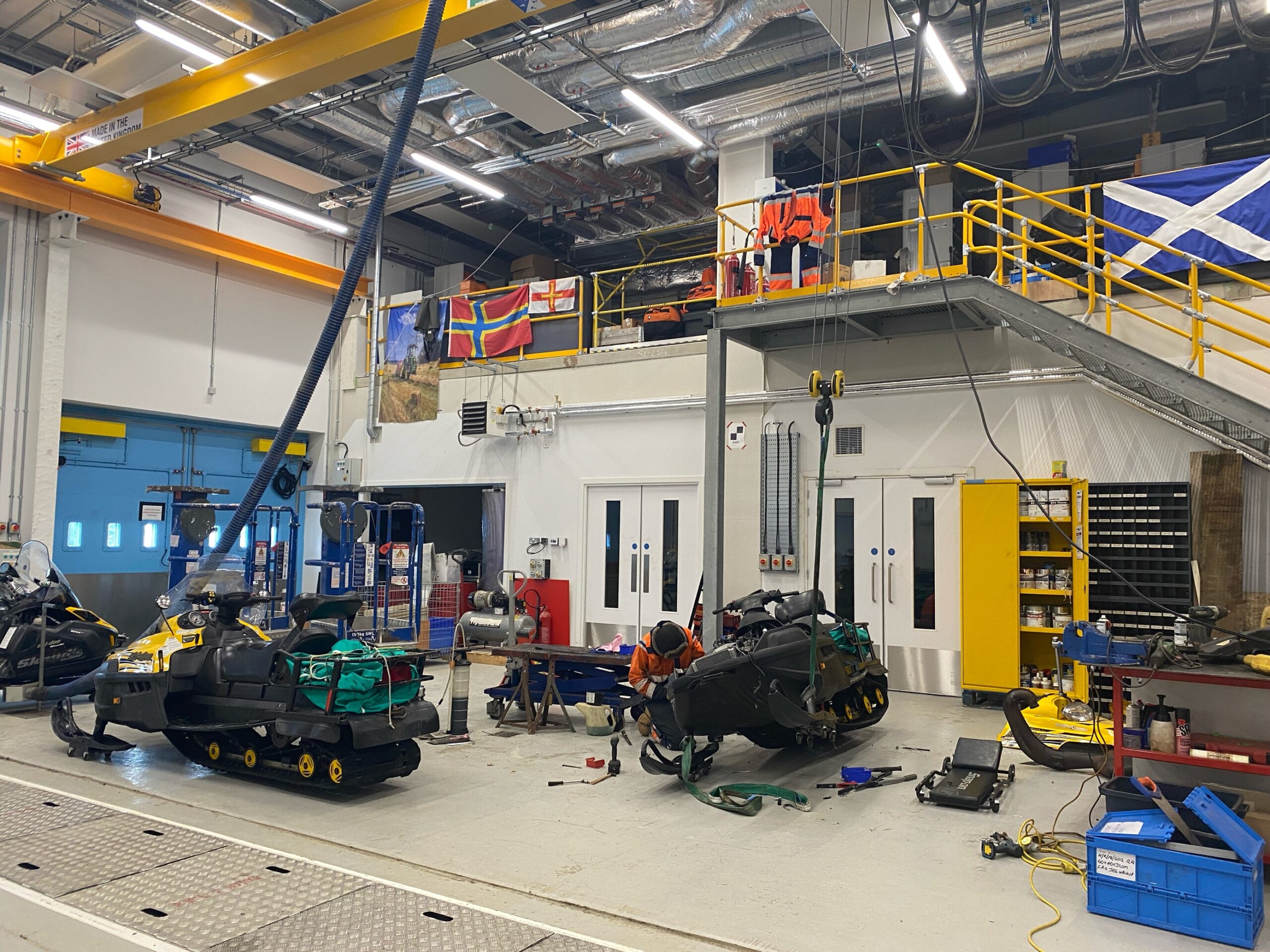
Check out our shiny new vehicles workshop
Meet Nick Withey – Antarctic traverse expert
Nick Withey is the Traverse Vehicle Engineering Manager. He spends several months a year driving across the Antarctic continent, moving vital science equipment and cargo. Here he tells us more about his job and career so far.
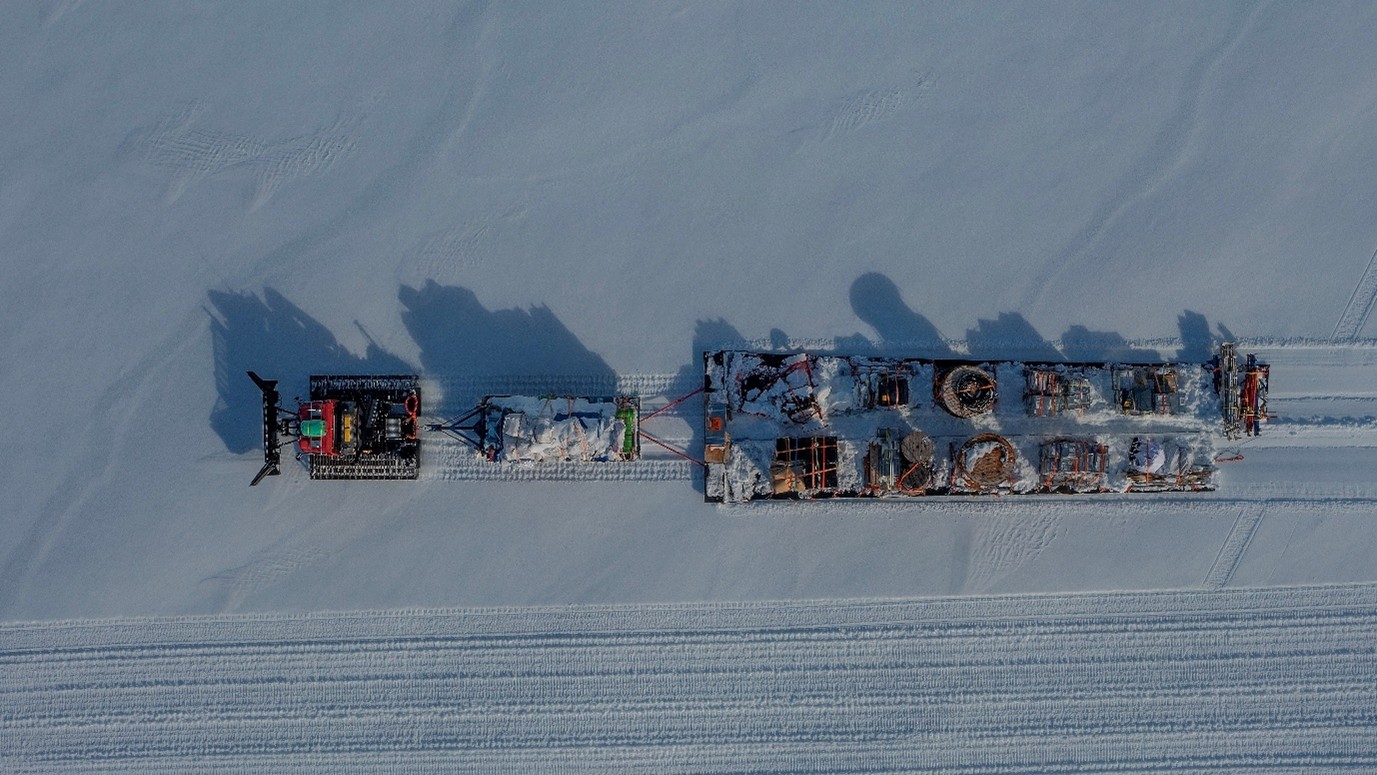
A traverse makes its way across Antarctica
What is a traverse and what role does it play in British Antarctic Survey’s research?
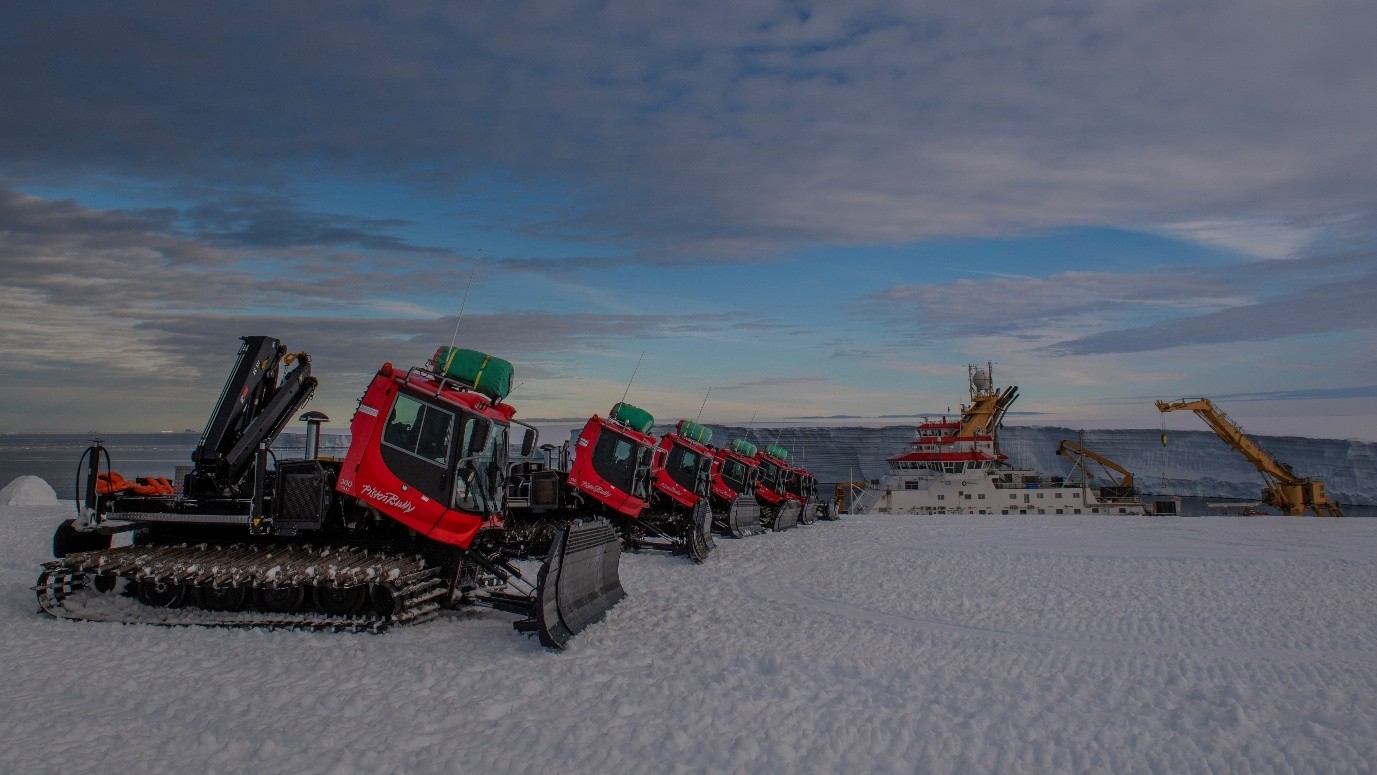
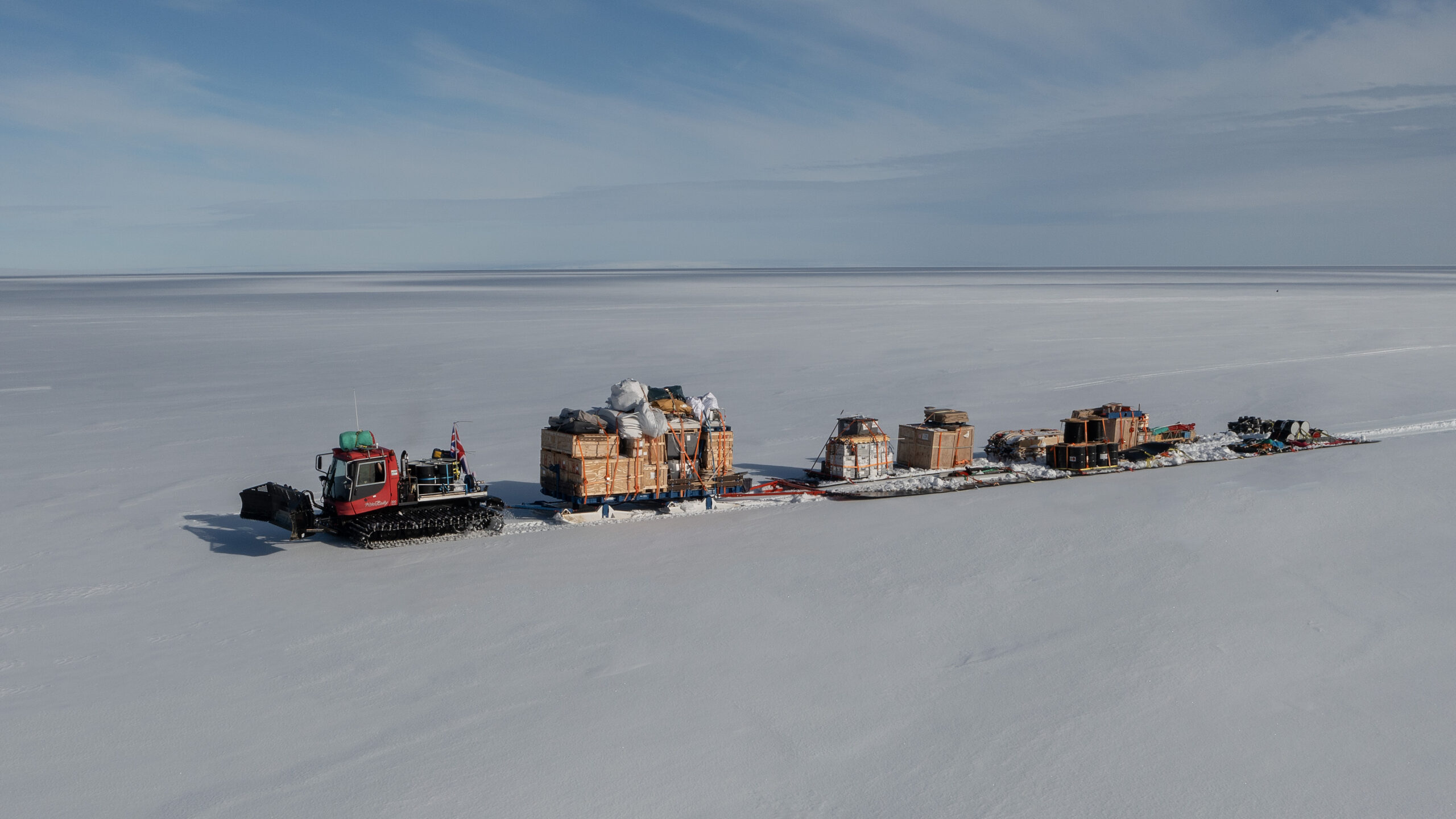
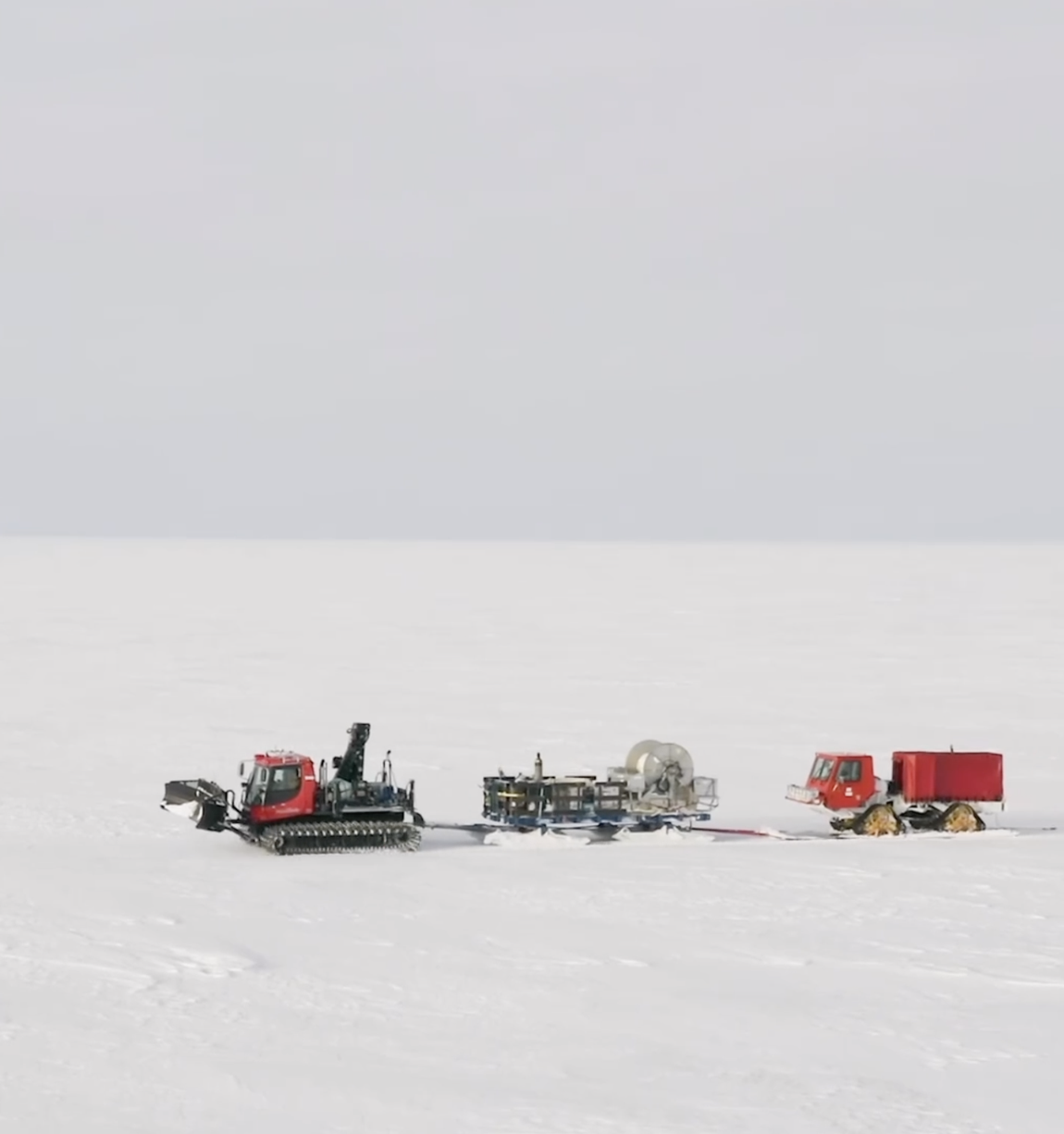
The Tractor Traverse is a set of vehicles (we call them trains) that travel in formation, towing various sledges. They’re used to move large amounts of science cargo and fuel to support science and deep-field logistics, in the depths of Antarctica. Generally there’s a team of six people – mechanics, vehicle operators and field guides – who keep the traverse going.
Take us through a typical day as Traverse Vehicle Engineering Manager
All you have to know about working in Antarctica is, everything takes three times as long to complete in the harsh cold environment.
Usually, we wake up at 6.30 because it takes over an hour to carry out all of our daily checks and warm up and prepare the machines to set off! We will drive at between 8-10kms an hour (about running pace) and aim to cover 80kms a day so this equates to long days of driving.
Once we have decided where to stop, it takes another hour to knock all the ice off the machines, fuel them up and put them “to bed”. Then we still have to cook dinner, maybe find time to read a book and sleep.
Where does each season’s traverse journey begin and end, and how do you navigate across a featureless ice sheet?
No season is ever the same but regularly travel distances of up to 3000kms per season (usually around 100 days) to deliver cargo or support science programs. We navigate via GPS and follow pre-programmed lines from point to point. Most days it can be compared to living inside a ping-pong ball, when you can’t differentiate between the ground and the sky – just bright white. It can be very disorientating with just a compass arrow to follow!
Once you set off, are you constantly on the move, or do you stop regularly?
We generally go from point to point, but whenever we stop to leave cargo, we have to do significant “depot” work. The snow is always falling in Antarctica so any equipment we leave has to be placed on a “berm”. A berm is a big hill of snow which we build with the Snow Groomers, on the top of which we place the cargo.
Hopefully then when we return the following year, the cargo will still be poking out the surface of the snow, otherwise we get digging to find it again.
Extreme logistics in action
 Nick Withey
  Jamie Oliver
 A “Sno-Cat”
How did you end up being the Traverse Vehicle Engineering Manager at BAS?
I spent the last decade working as an Overland Tour Leader/Mechanic. I had a very unique job, operating adventure tours, driving people all over the world. I’ve now been lucky enough to drive across all seven continents. The Traverse was the next progression for me.
Looking back over your time in this role, what’s the one moment that’s really stuck with you?
Flying all the way from WAIS Divide (Western Antarctic Ice Shelf), over the top of the Ellsworth Mountain Range and Mt Vinson (the highest Mountain in Antarctica) only to land and have to dig up some fuel to make the flight all the way home. Amazing scenery!

Listen to Nick on this episode of our podcast Iceworld, all about travelling in a tractor traverse.
Want to see a traverse in action? Check out this video from the International Thwaites Glacier Project – a UK-US collaboration to study the one of world’s most unstable glaciers.
Extreme logistics
Antarctica, January 2025. Expert teams are making their way across the stark frozen landscape, by sea, land and air – and they are planning to meet. The English Coast of Antarctica is 600km from the nearest research station – a remote frontier, where the ice cliffs of the Stange Ice Shelf mark the edge of a giant floating, frozen wilderness.
It is here that the British Antarctic Survey (BAS) completed an epic logistics operation, literally in the middle of nowhere. Check out this short film showing the RRS Sir David Attenborough docking along the English Coast to recover and deliver scientific cargo to West Antarctica. Get a glimpse of how British Antarctic Survey teams create ice ports and establish supply routes across one of Earth’s most remote environments.
Keeping fit and healthy in Antarctica
Lots of thought has been given about how to maintain the health and wellbeing of the people living down south. The new Discovery Building is equipped with a gym, library, craft rooms, and social spaces where quizzes and talent shows take place.
Many functional spaces at Rothera are transformed into recreational areas when not in use. For example, when planes aren’t taking off or landing, the runway is used as a running track, measuring around 900m. Similarly, the airplane hangar apron, which is the flat area where planes park, is used for football and even quidditch matches (a magical sport to match the magical backdrop!).
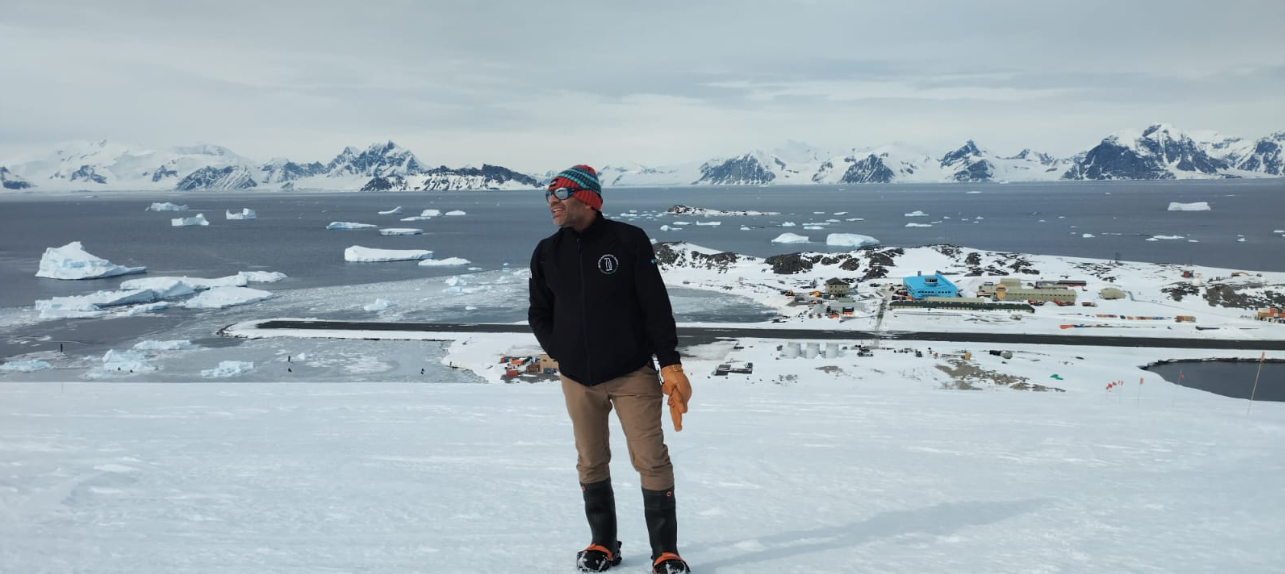 Arun Sharma
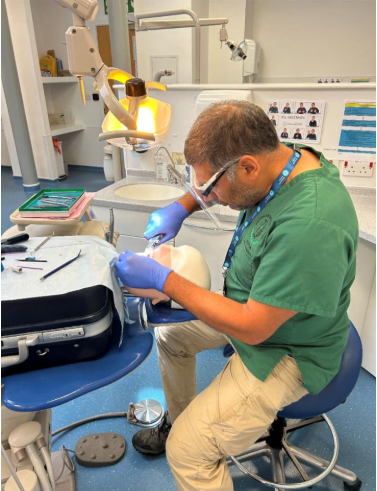 Arun Sharma
 A walk to Rothera Point offers a chance to clear the head. Everyone has to sign out and take a radio for safety, but once there, people can enjoy the peace and swap human company for the company of the seals relaxing on the coast.
Rothera is equipped for all sorts of sickness and injury because the nearest hospitals are thousands of miles away.
Dr Arun Sharma is a Doctor at Rothera Research Station. He’s been here four weeks so far. Arun did special Antarctic training in “how to use the x-ray machine and getting a crash course in Dentistry.” He was even taught how to use the hyperbaric chamber if a diver gets ‘the bends’ – a dangerous condition caused by coming up from deep water too quickly.