Entry 11 Day 70 10 December Altitude: 0 ft Distance: 13,738 km Speed: 0 knots/hr
The end of the journey
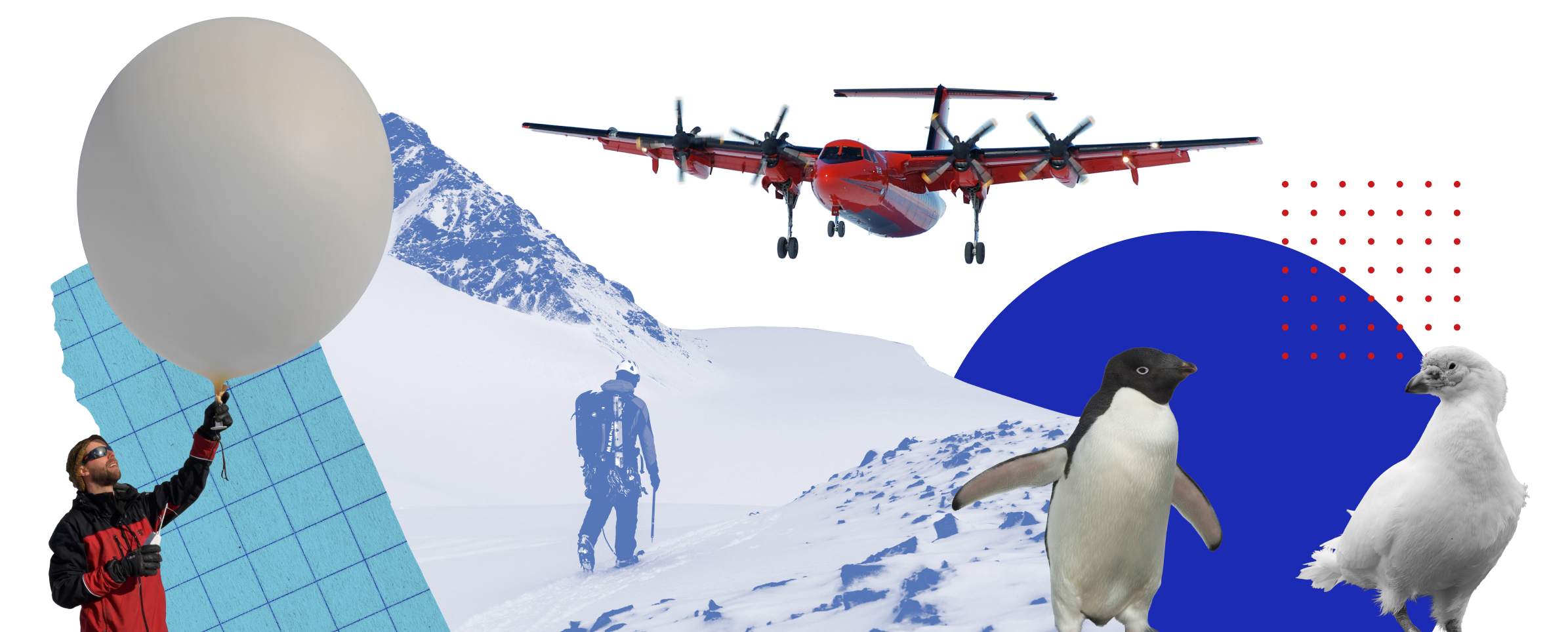
After 12 wonderful weeks, our journey around Antarctica has come to an end. But before we say our goodbyes, we’ll watch a weather balloon release from Halley VI Research Station, learn more about the birds of Bird Island and see some hot-off-the-press photos from one of our Twin Otters in Antarctica!

Releasing a weather balloon at Halley
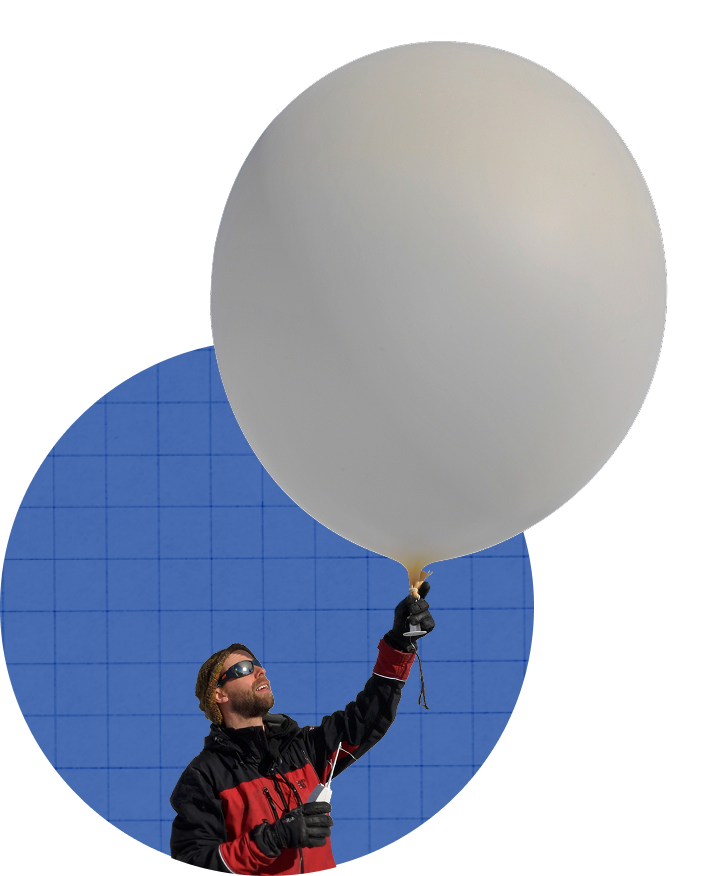
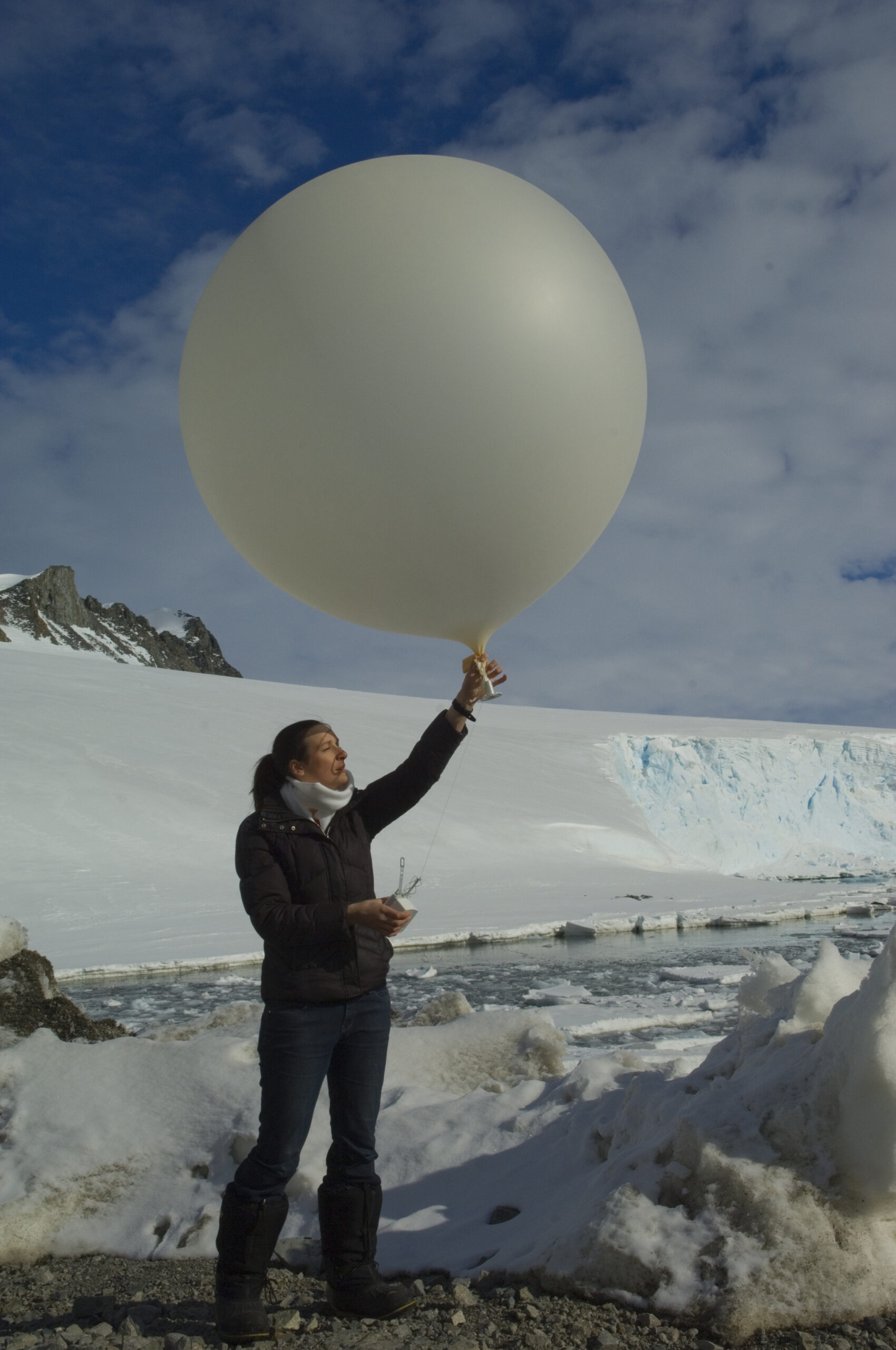
First stop – we’re back at Halley, where we join meteorologist Hannah Lobo to release a weather balloon.
This big balloon is filled with helium and is fitted with a device called a radiosonde. This bit of kit measures temperature, pressure and humidity as the balloon rises up into the atmosphere. The balloon also has a GPS so we can calculate wind speed and direction. Measurements are taken every two seconds and are transmitted back to the station.
Did you know?
The balloon can travel about 35km up into the atmosphere (almost the length of a marathon!) As it does so, it expands to the size of a double decker bus before bursting!
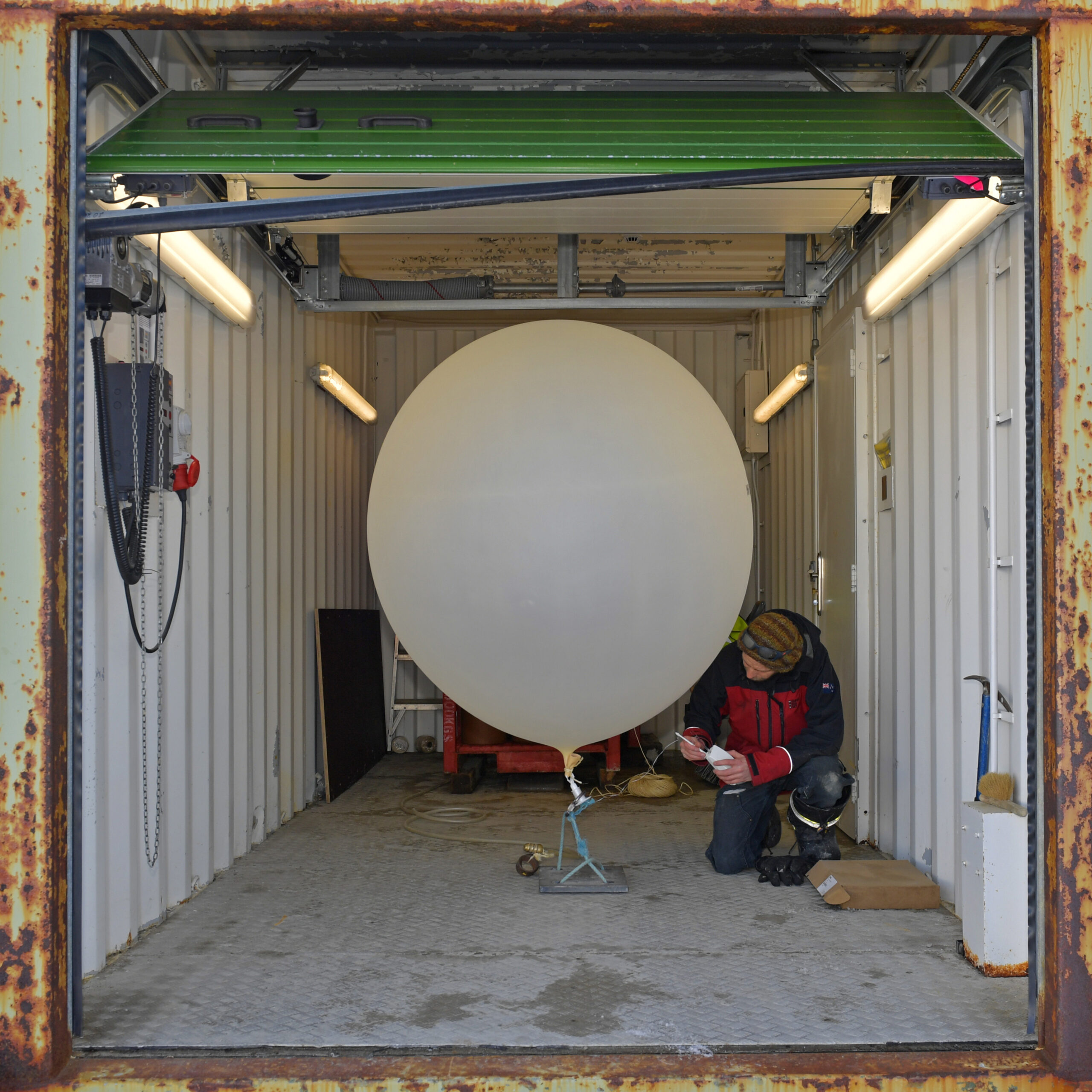
These balloons are released four times a week, all over the world. They provide a snapshot of what is happening in the lower atmosphere. It also builds a long-term picture of change as our climate warms.
By analysing weather balloon data collected over the past 30 years, we’ve seen that the Antarctic atmosphere has warmed below 8km, and cooled above this height. This pattern is seen globally and is what we would expect to say, as greenhouse gases rise.
Meet the birds of Bird Island
It shouldn’t come as a surprise that there are a lot of birds on Bird Island. But which bird is the best?
We have six Zoological Field Assistants who spend their days counting these charismatic creatures to help understand how their populations are changing over time. We asked them to share why the bird they study is the best.
An albatross soars over the ocean
 Jamie Latimer
  Jess Callaghan
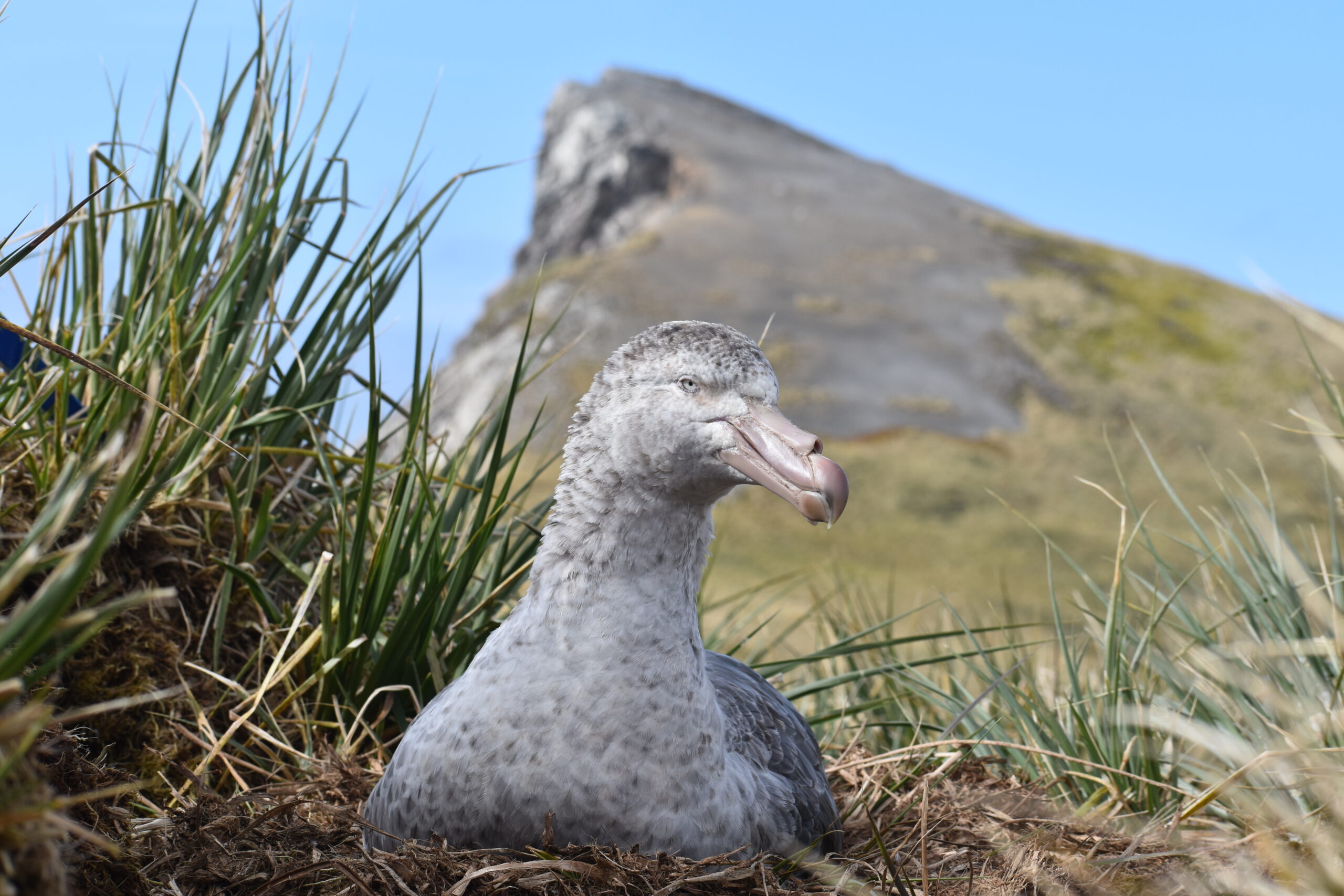
 A giant petrel sits on a nest
Pete Tarrant on the wandering albatross:
They are magnificent birds with huge wings – the largest wingspan in the world! Some reach up to 3.7 metres, or 12 feet! They use these wings to wander the oceans, travelling huge distances to search for food. Some wandering albatrosses have been known to circumnavigate the entire Southern Ocean, all the way around Antarctica, three times in one year, totalling 75,000 miles!
When they do return to land to breed, they can form strong and affectionate bonds with a life partner, who they won’t see for two years at a time until they meet again for the next breeding season. Besides this, they have a very silly walk and make all sorts of strange noises!
Jamie Latimer on giant petrels:
The giant petrel is my favourite bird here on Bird Island – they are fantastic flyers and are great parents, caring for their fluffy chicks.
They are the largest petrels in the world, and they are the only petrel which can actually walk. They can also live for a long time, up to 40 years.
We have both Northern and Southern giant petrels breeding here on Bird Island, Northern’s have a red tip to their beak and Southern’s have a green tip.
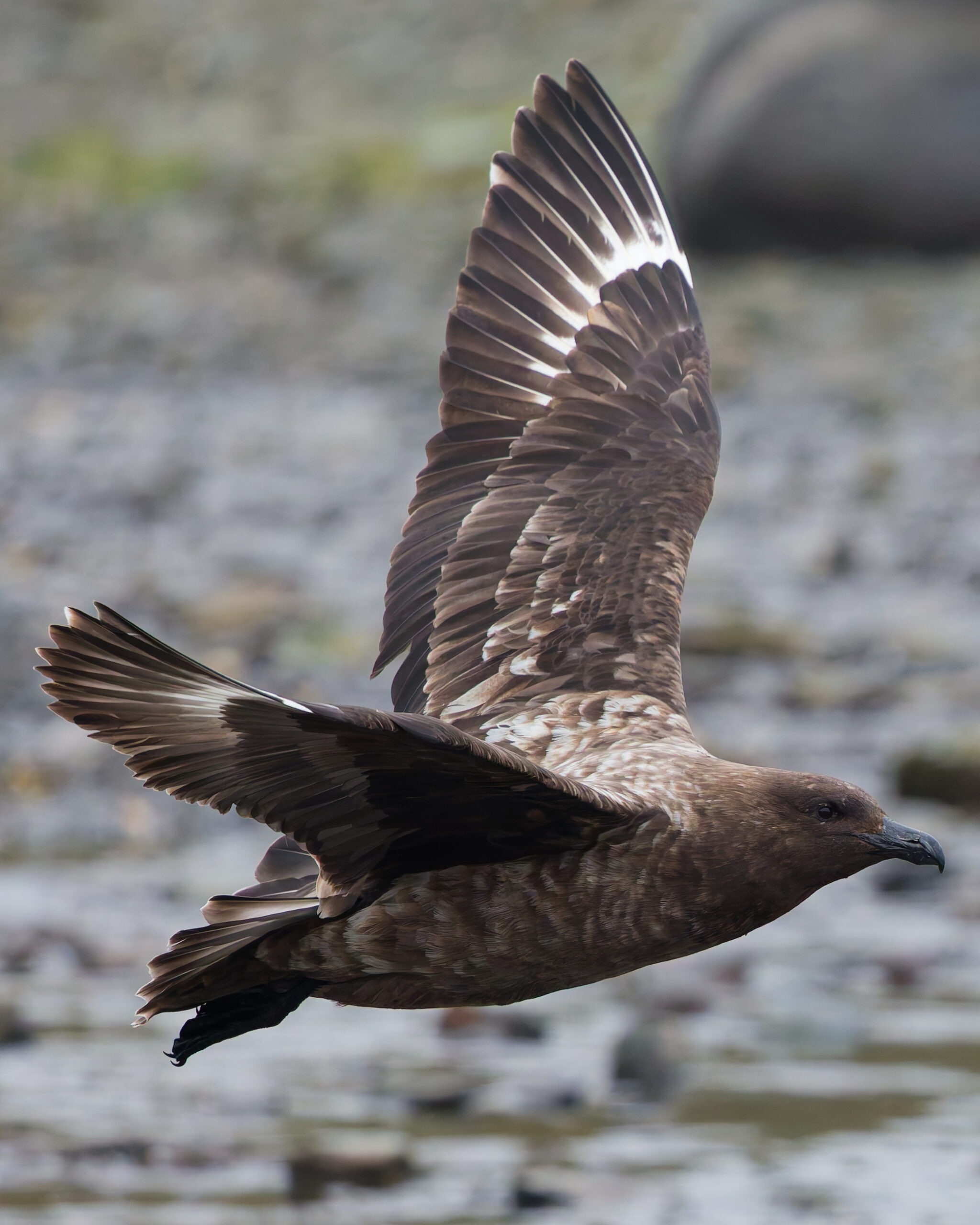
Brown skua
 Jamie Latimer
  Alastair Wilson
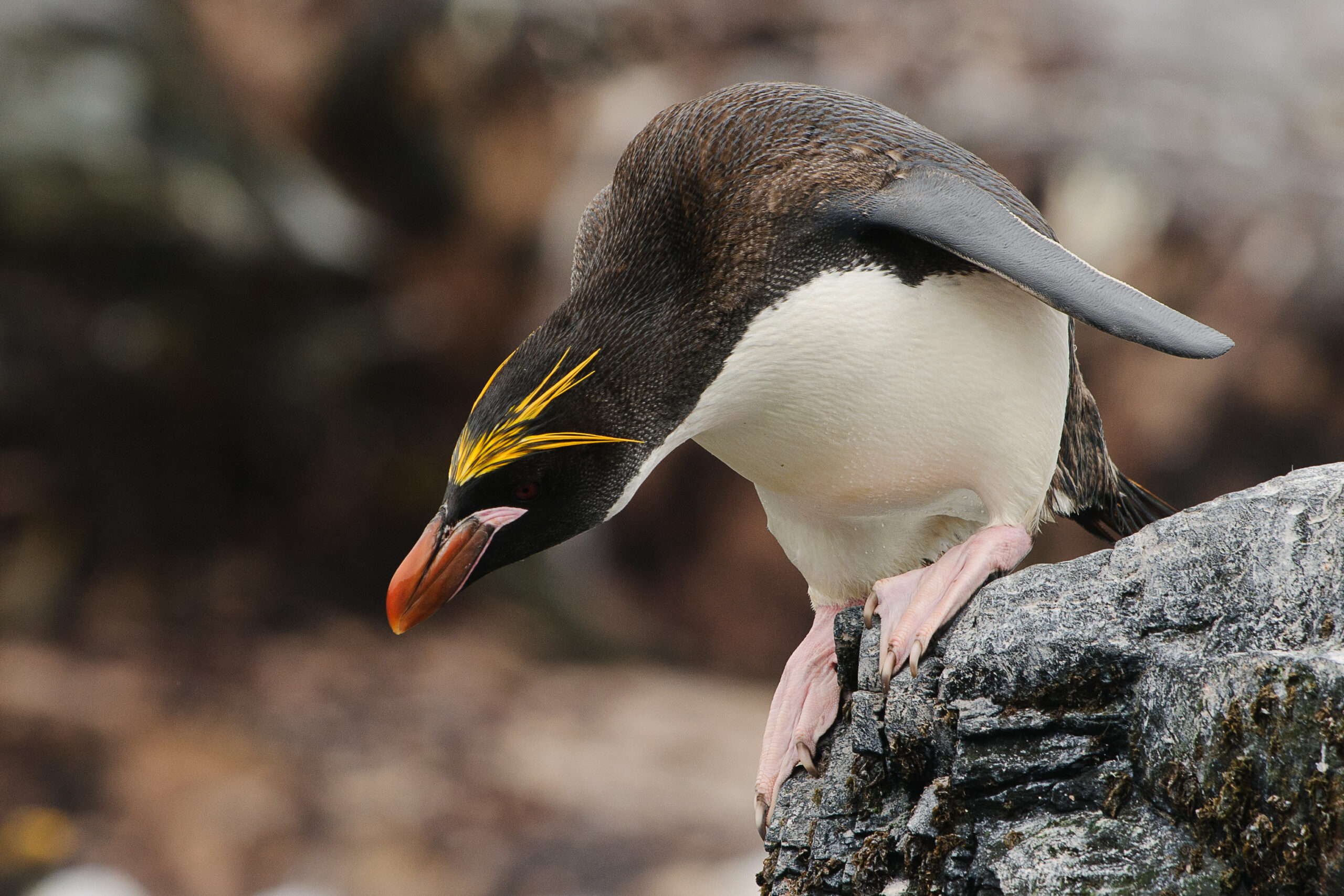
 Macaroni penguin
Hannah Greetham on brown skuas:
The brown skua is my favourite bird on Bird Island because they’re very clever.
Most of their food is through kleptoparasitism – stealing food that others (fellow skuas and other species) have collected, hence they are known as “sky pirates”. They are also super curious, you can’t leave any equipment lying around as they are likely to pick it up and steal it!
Even though they are pirates, they love to be presentable and spend a good part of their day bathing in the streams and ponds.
A large group of skuas is known as a ‘club’.
Katherine Thomas on macaroni penguins:
Macaroni penguins are very recognisable with their bright yellow crest and red eyes. They nest here on Bird Island in dense breeding colonies. The largest, called Big Mac, is so huge it even has a penguin motorway through the centre of the colony!
Macaroni penguins are great “rock climbers” and reach their nests by hopping up the steep rocky slopes. Like the Antarctic fur seals, they are energetic swimmers and can be seen porpoising (when they swim through the water, launching themselves out to breath, like a dolphin) as they arrive back from their fishing trips.
Snowy sheathbill
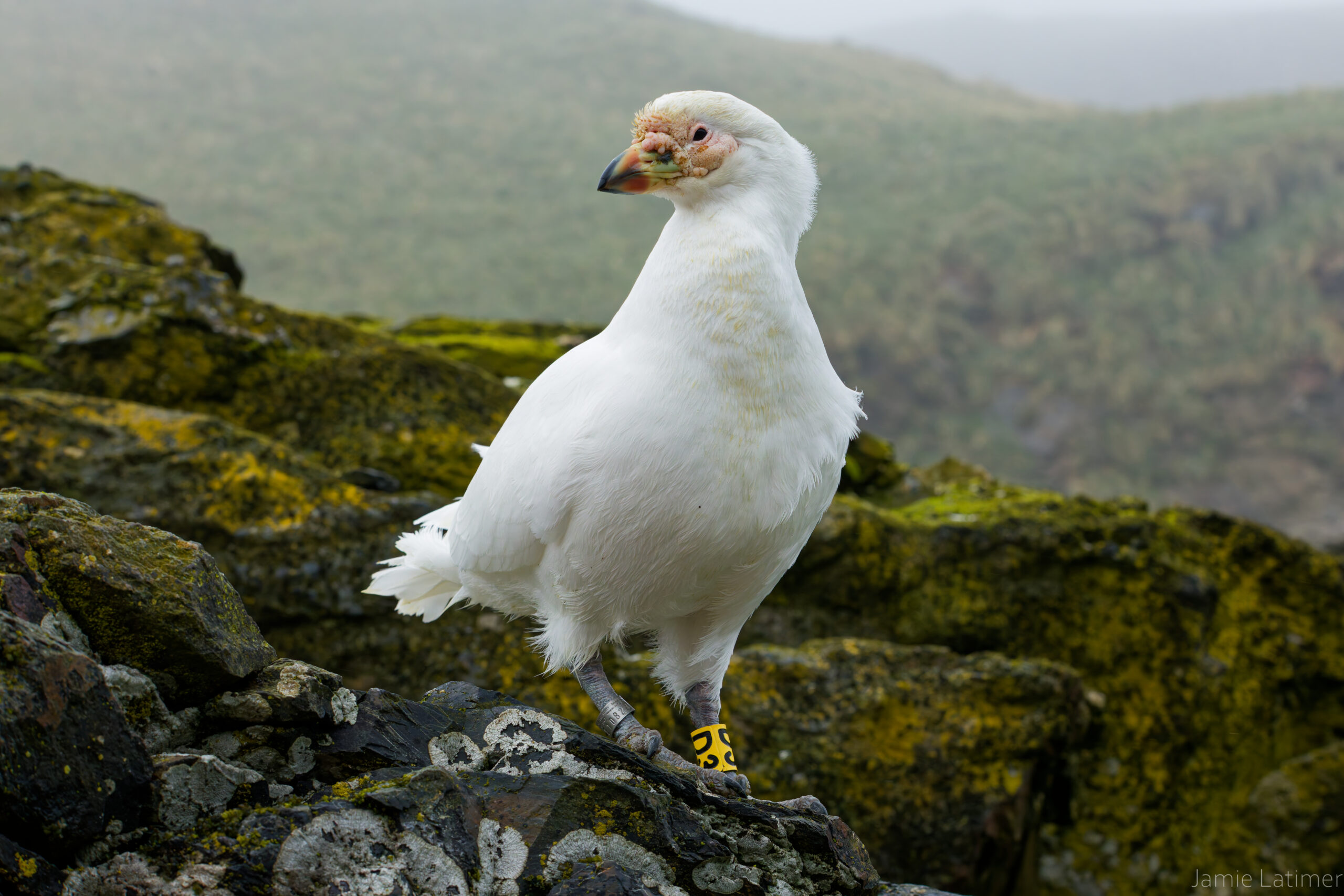 Jamie Latimer
 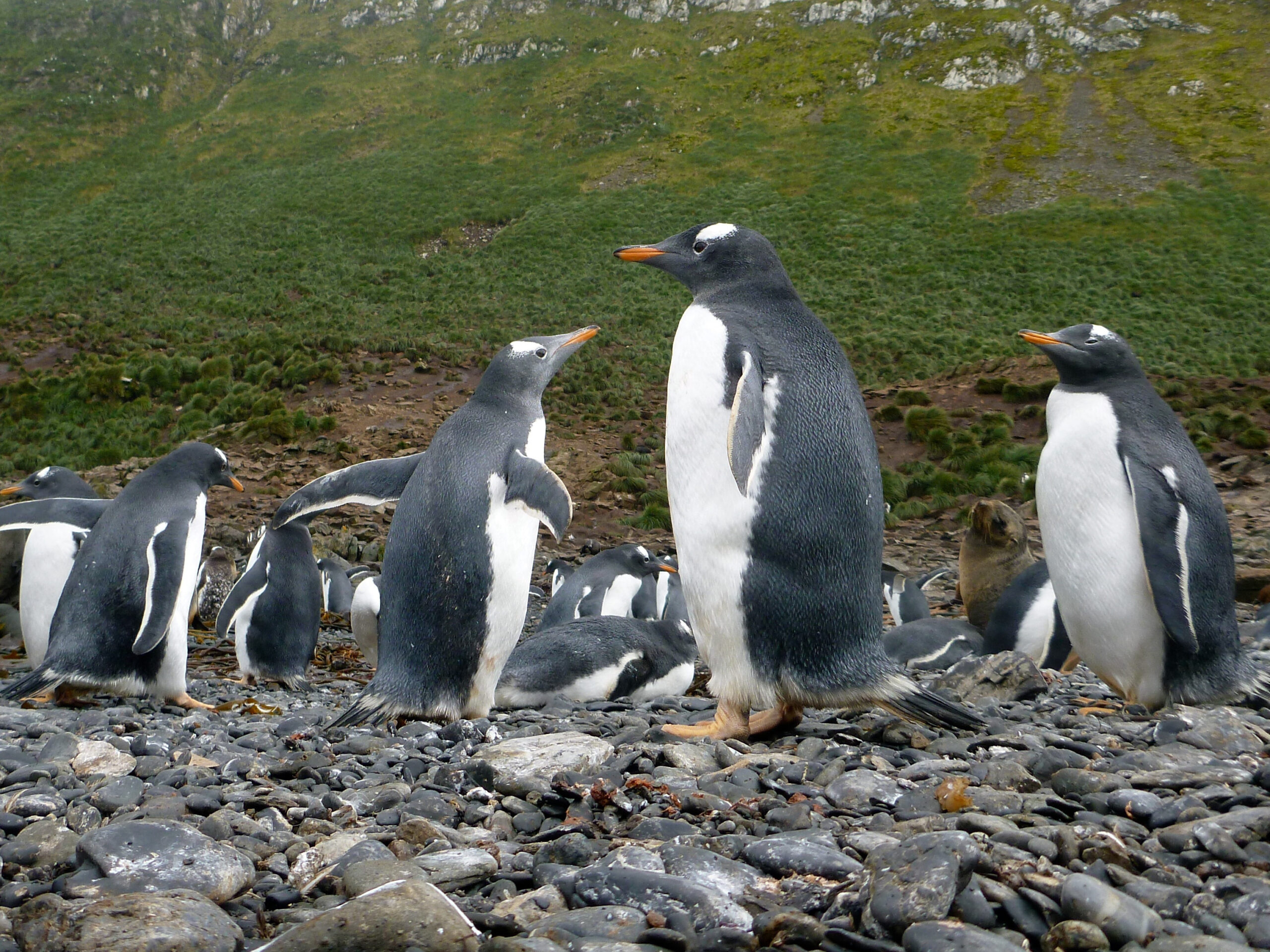 Adam Bradley
 Jess Callaghan on the snowy sheathbill:
They’re easily my favourite bird inhabiting Bird Island.
For a bird that eats penguin poo, they are exceptionally clean and pride themselves on preening their glistening white feathers. Sheathbill chicks hatch as brown fluffballs, but by the time they fledge, their plumage is completely white – just like their parents!
For scavengers, the Sheathbill is totally underrated. They help to keep the beach clean by eating up all the poop and polishing off any tasty meat left on old skeletons. Like the Skuas, Sheathbills are kleptoparasites and are known to steal krill from penguins by kicking them in the face!!
They are also VERY interested in people and they will run across the beach to have a good look at us.
Charlotte Rayner on gentoo penguins
The gentoo penguins are my favourite bird here on the island – we walk past a breeding colony on our way to the study beach for the fur seals daily. I’ve been lucky to see them building their nests stone by stone, picking the perfect stone to give to their partner, the first egg laid and the first tiny chicks to hatch, to the chicks now standing independently next to their parents.
The gentoo is the fastest penguin underwater, swimming at 22mph when trying to catch food or escape a predator.
Studying Rothera from above
Nathan Fenney is a geomatics specialist at British Antarctic Survey. His job is to collect and analyse information about a place to create things like maps and models to help us study and understand Antarctica.
He’s currently at Rothera, spending a lot of time in one of our Twin Otters, collecting amazing images using a special camera called a Phase One PAS aerial camera system. These photos will be used for two different projects – POLOMINTS (which is all about how glaciers calve and create underwater tsunamis) and the Penguin Census Project, which (you guessed it!) is all about counting penguins.
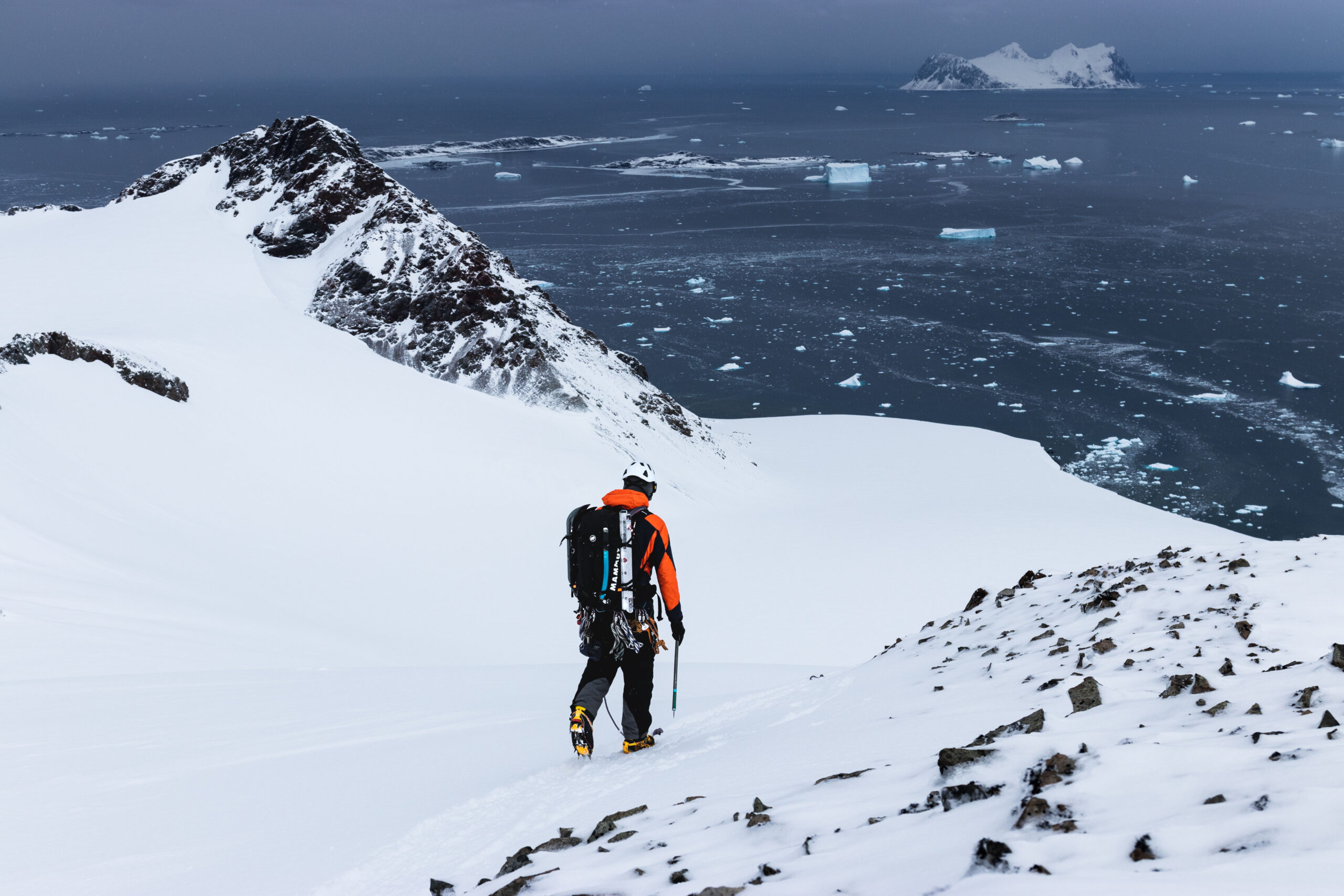
Nathan at work in the field
We’ve had a successful start to our flying projects. Over the past three days we have completed six flights, including flying at night to be in sync with the local tidal cycle.
Nathan Fenney
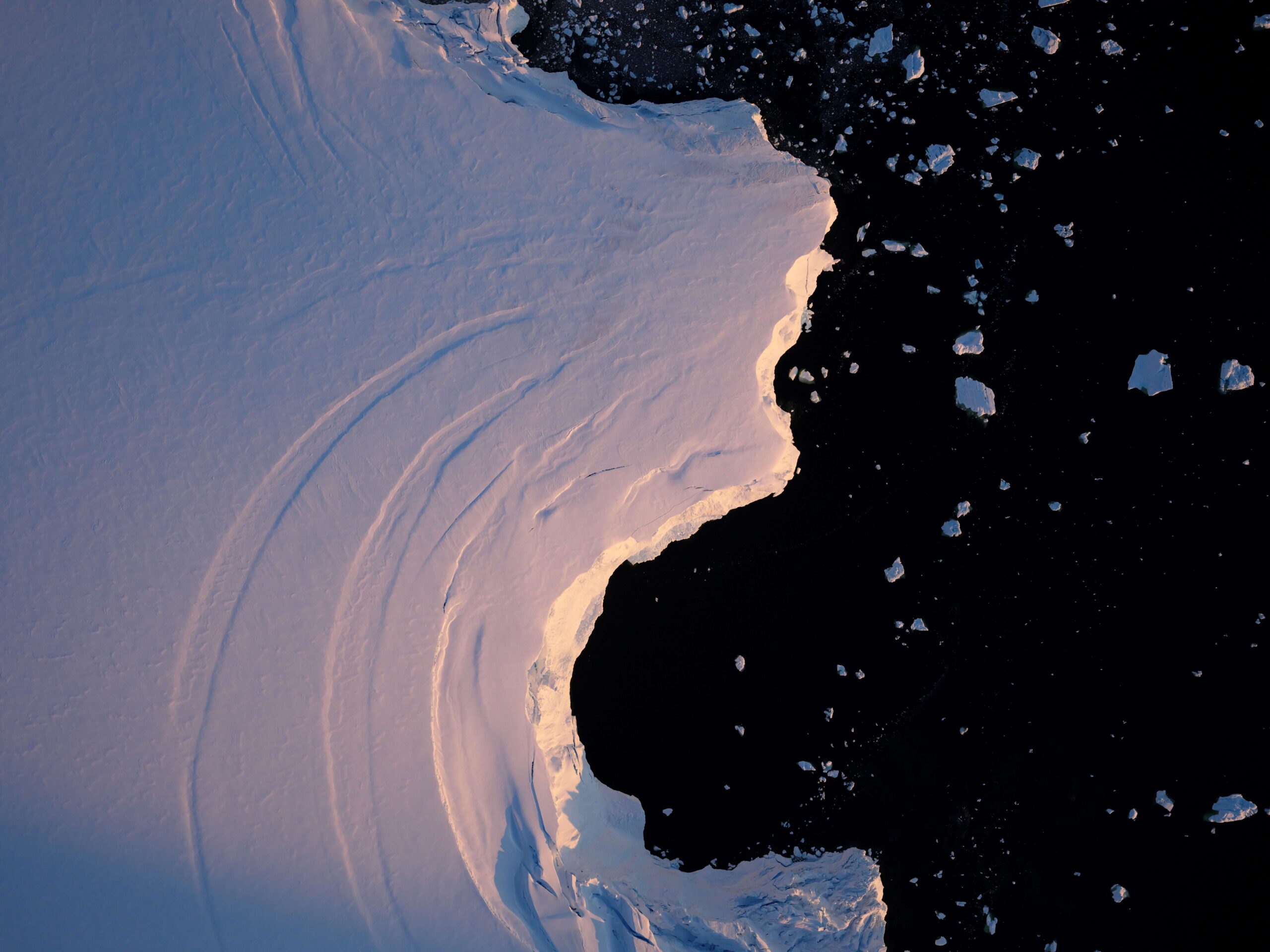
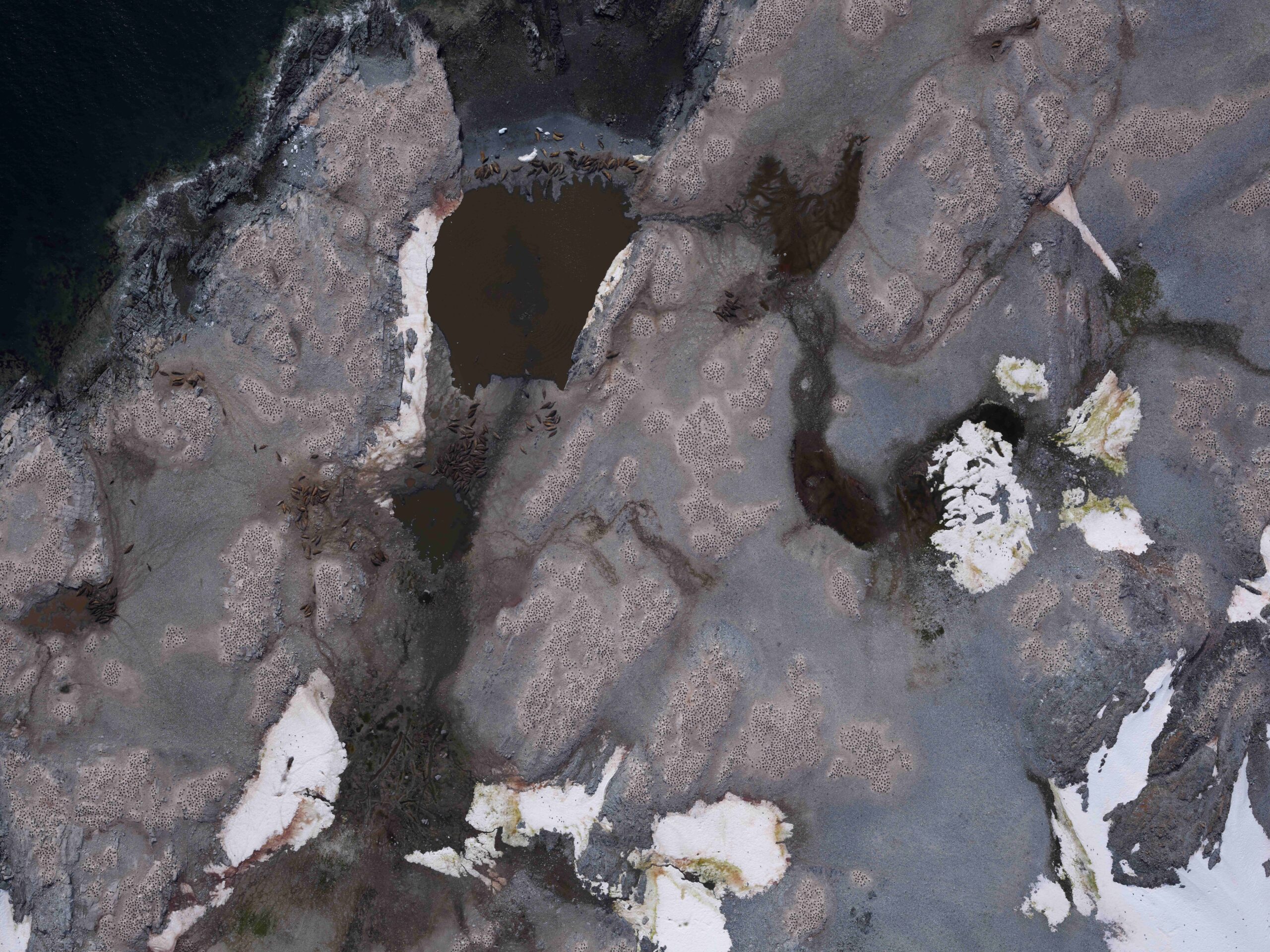
The resulting images are stunning, with the Sheldon Glacier lit up in shades of pink and purple. The camera system can capture very high-resolution images over large areas quickly. For the Penguin Census Project, we’ve been collecting imagery with a ground sampling distance of 2.5 cm, allowing us to see individual penguins from 1500 feet!
We asked Nathan to tell us more about his work at British Antarctic Survey…
What is your job?
I am a geomatics specialist with the Mapping and Geographic information Centre (MAGIC) at BAS. We’re responsible for things like publishing maps or carrying out surveys. I lead geomatics and so am responsible for lots of geospatial data collection.
What does a typical day look like?
My work varies quite a lot, so one day I could be walking around measuring points on the ground and the next I could be flying in an aircraft to count penguins!
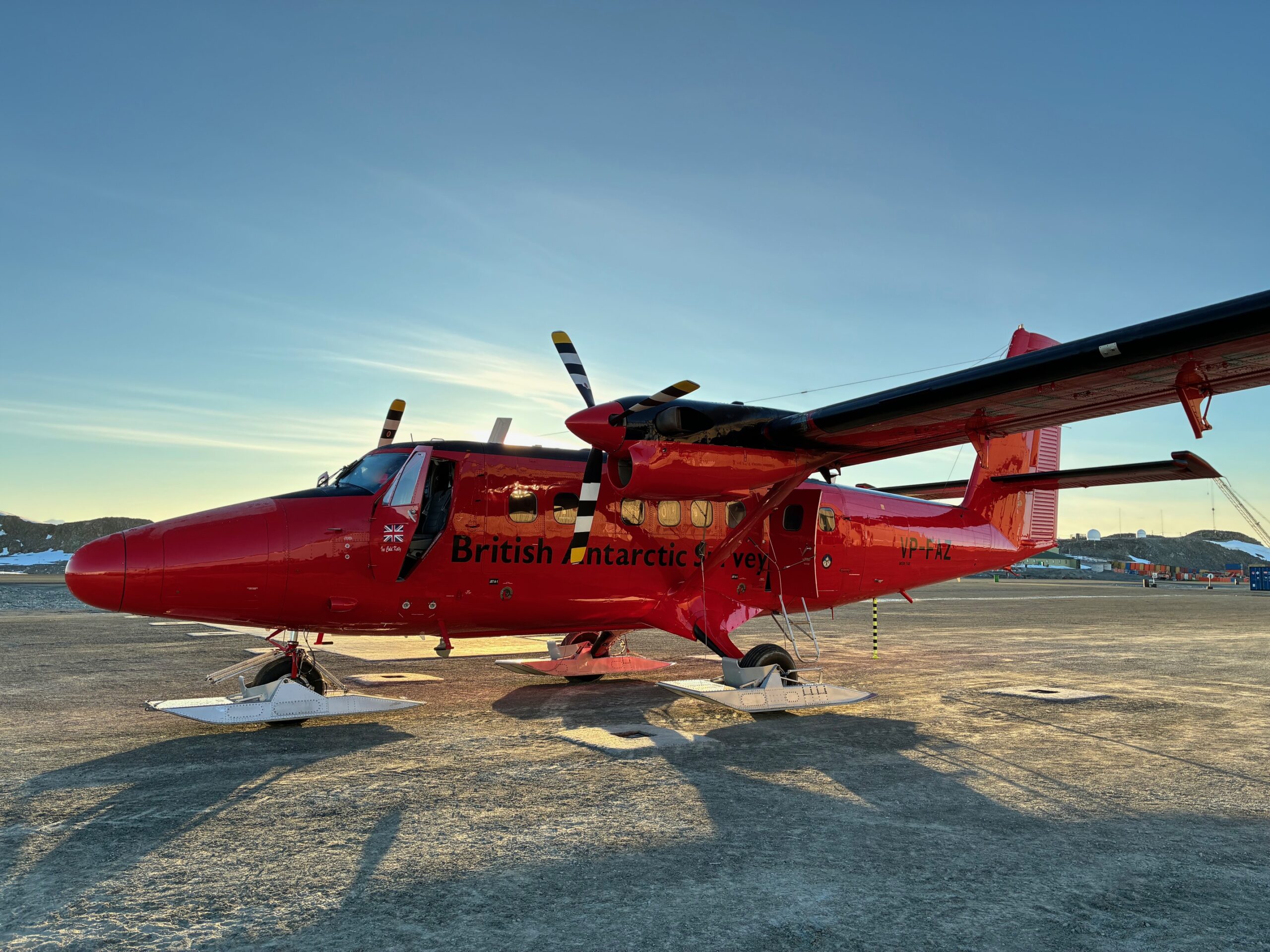 Connor Bamford
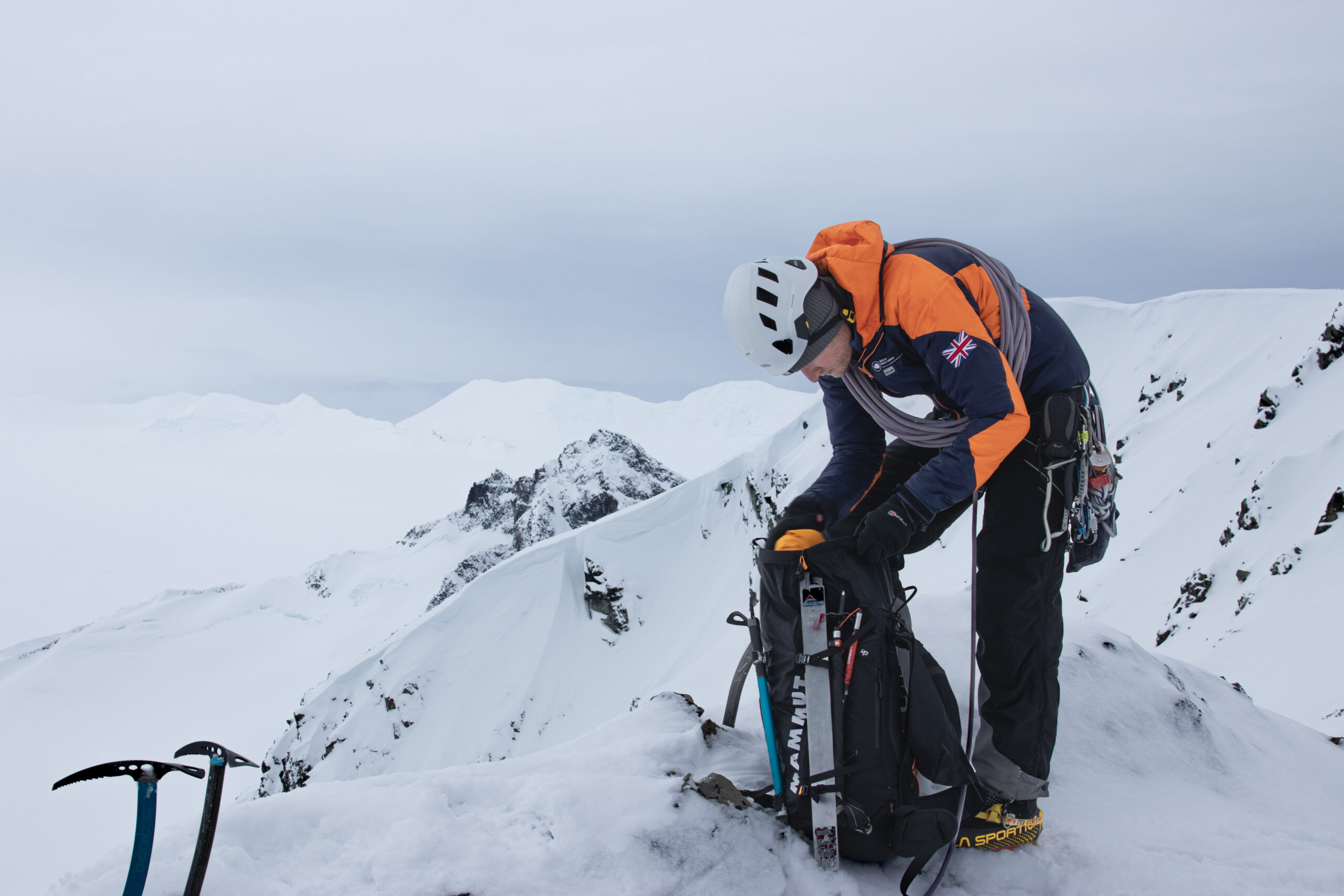 Connor Bamford
 What tools and equipment do you use in your job?
Geomatics can require a wide variety of equipment to map and / or survey areas. This can include UAV’s (uncrewed aerial vehicles) or drones, GNSS (Global Navigation Satellite Systems) receivers, laser scanners and aerial cameras systems (mounted in BAS’s Twin Otters).
What’s the most exciting thing you’ve done in your job?
Flying around in Twin Otters and getting to undertake aerial surveys is a lot of fun! One of my most memorable moments was flying through the Lemaire Channel while a cruise ship sailed beneath us.
What information are you trying to collect in Antarctica?
This season I’m working on the Penguin Census Project and POLOMINTS. For the Penguin Census Project, we are carrying out a series of test flights to collect aerial imagery over penguin colonies located along the western side of the Antarctic Peninsula. The imagery will be used to determine the population of each of the colonies, allowing scientists to monitor how they are changing through time!
For POLOMINTS, we’re installing cameras on the ground to monitor the Sheldon Glacier over the next two seasons. We are also doing a series of aerial surveys to measure small changes to the surface elevation of the glacier over the course of the season.
Sheldon Glacier lit up during a night flight
 British Antarctic Survey
  British Antarctic Survey
 Can you spot the penguins on Avian Island??
How long do you typically spend in Antarctica during a field season, and where are you based?
I typically spend two months in Antarctica each season and am often based out of Rothera, however, more recently I’ve done quite a bit of work in the sub-Antarctic at South Georgia.
How did you end up in this job? What made you want to do this job?
I actually studied Geology and Anthropology at university. While working as a geologist in Australia, I was introduced to a technique called photogrammetry, which allows you to model surfaces in 3D using cameras. I became interested in understanding how we know where things are and so went back to university to study Geographical Information Science.
Missing home
Living in Antarctica is amazing – you get to see and experience things that most people in the world never will. However, it does come with a cost – being away from family and friends for months at a time.
We spoke to Camille De Pasquale, who is a Marine Biologist at King Edward Point Research Station. She’ll be spending two years on the station, with a break about halfway through. We asked her what it’s like being away from home for many months at a time.
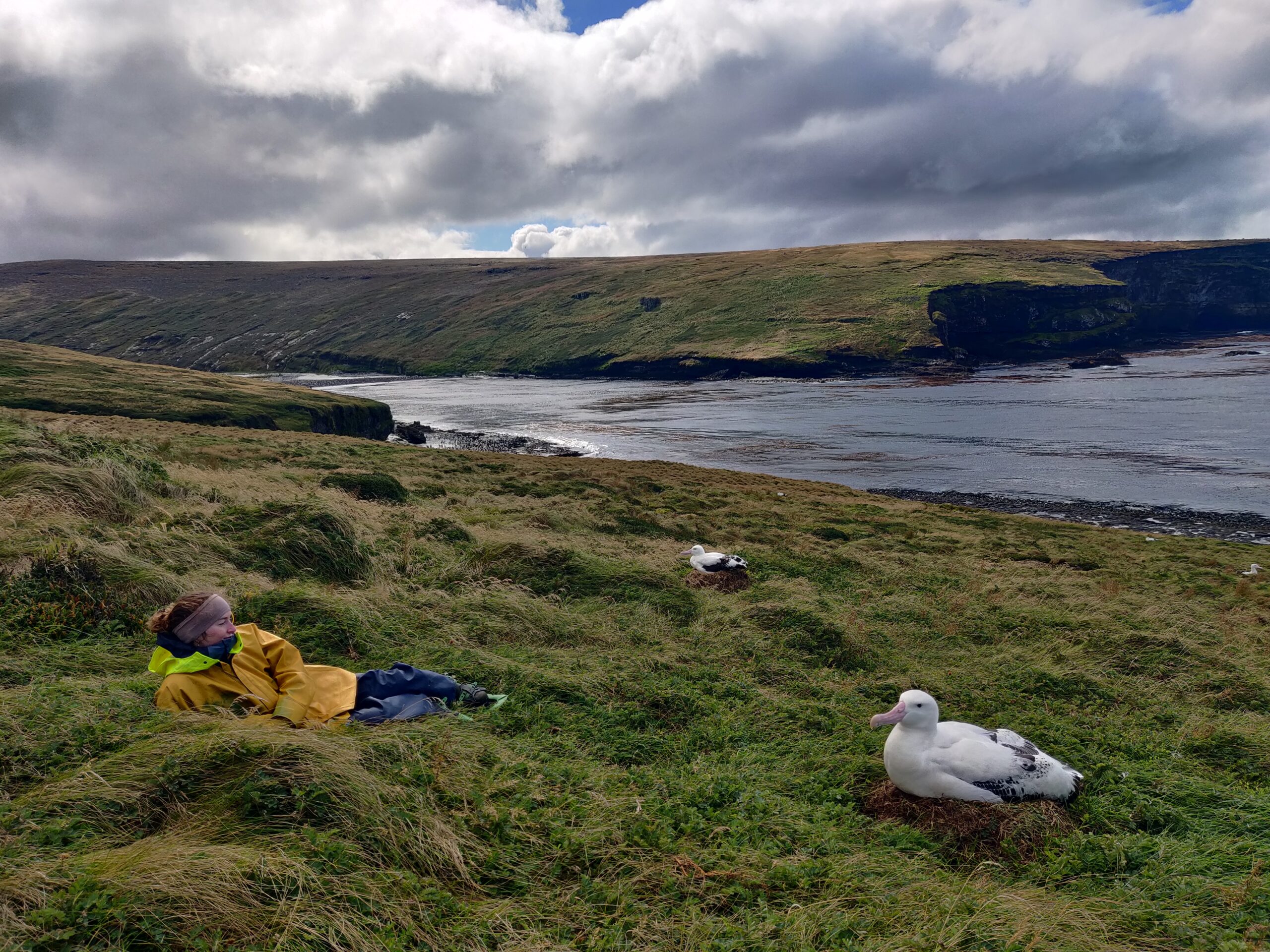
Taking in these beautiful birds after a long day surveying
Is this the longest you’ve been deployed for?
Yes! I previously spent just over a year on the Crozet Archipelago, part of the French Southern Territories, so I’ve had a bit of experience with long stints away.
What’s the thing you miss most whilst deployed?
What I miss the most are the people I love – my family, friends, and of course, the family pets.
Also, I really miss “freshies” – fresh fruit and vegetables can be rare or even non-existent down South. On my previous deployment, I missed going to the market, picking out strawberries and salad (my favourites), and cooking at home. I’ve heard we’re lucky at King Edward Point because the Pharos (the Government of South Georgia’s fisheries patrol vessel) visits often, which means we get a bit more freshies than other stations. So, who knows, I might end up missing something different this time!
What’s your top tip for dealing with missing home?
When I start missing home, I find that organising activities with the team really helps, whether it’s games, sports or cooking together. It’s a great way to take your mind off things. When possible, I also like to get outside and take in the island and its wildlife – it reminds me why I’m here in the first place.
And of course, I try to stay in touch with my family and friends. During my last deployment, I shared a blog with them so they could follow along with what I was doing.
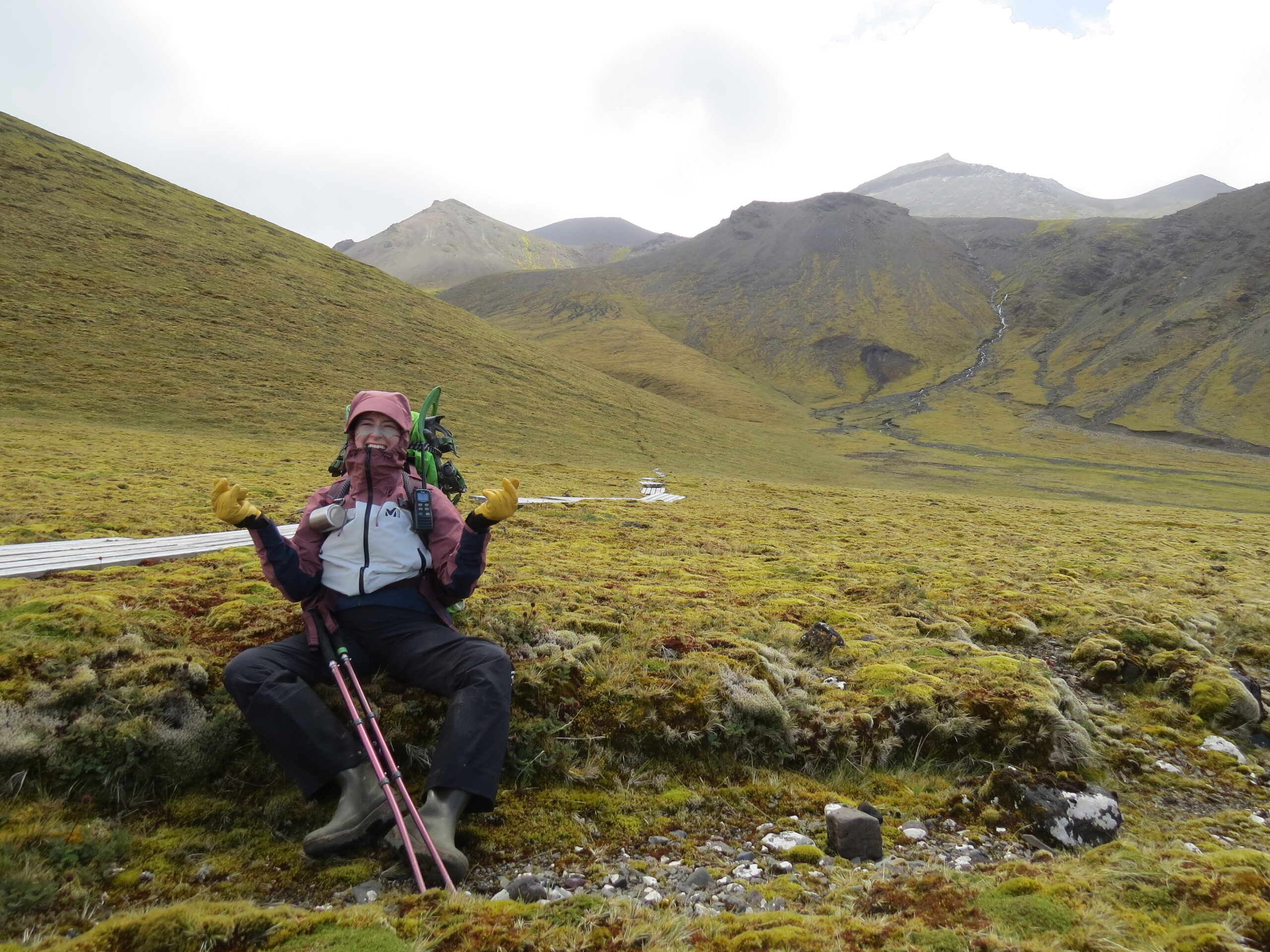 Camille De Pasquale
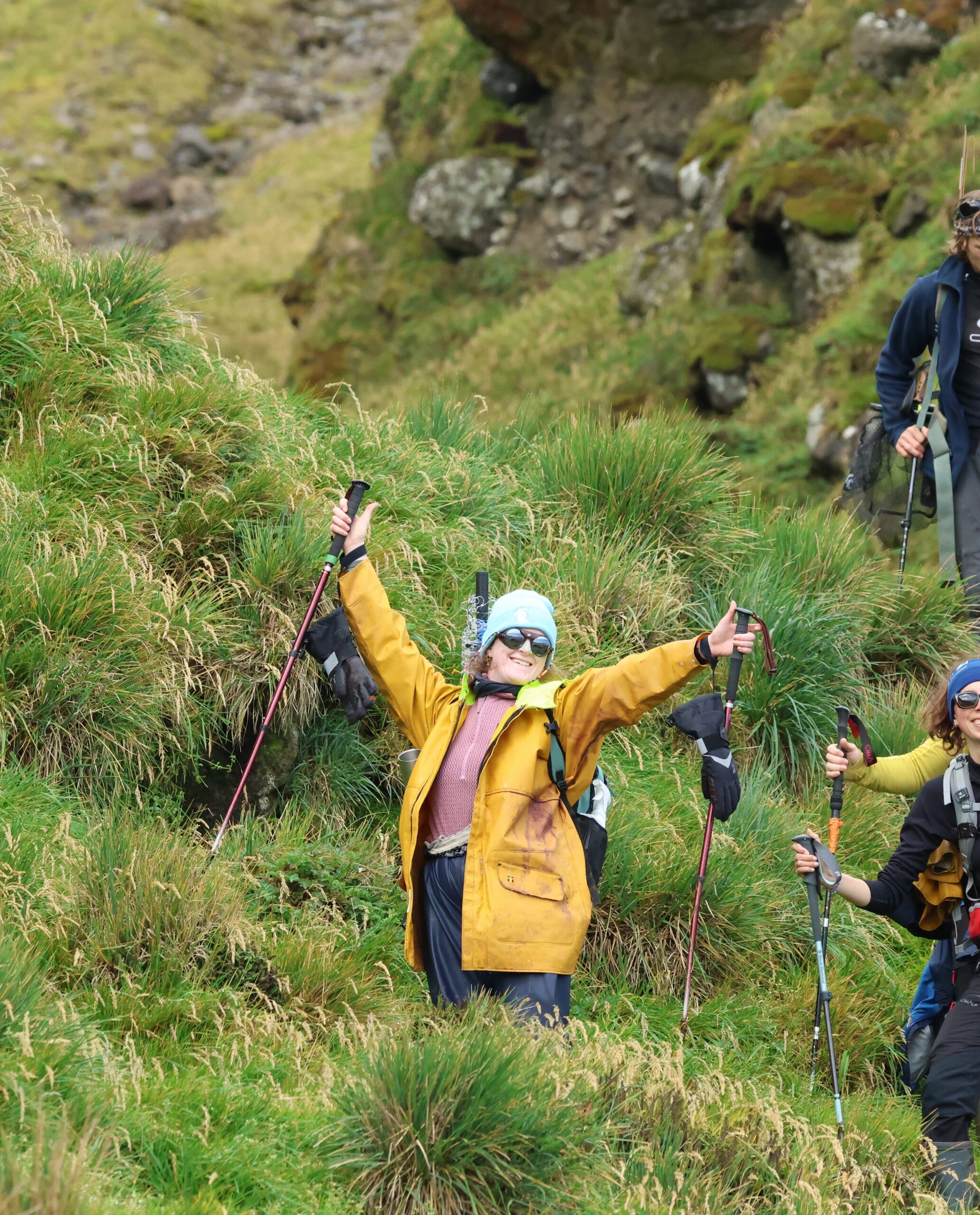 Camille De Pasquale
 How can you stay in contact with people at home?
WhatsApp is a big help! My family often sends me photos of themselves and the pets every week, and they usually make videos for special occasions like Christmas and my birthday.
Phone calls are always lovely, although they can be tricky to schedule during fieldwork or the busy summer period. I’ve found that voice messages are a great alternative, especially with my friends. I can record messages when I have time and listen to theirs while I’m doing other tasks. It kind of feels like having them here with me.
What support is available on the station?
The team itself is a huge source of support. We all go through similar feelings and being able to talk openly and support one another is really important. We also have a doctor on station. BAS is also very supportive of mental health, and there are plenty of resources available if needed.
Do you want to work in Antarctica?
Have you enjoyed these updates? Do you think you’d like to work in Antarctica? We’ll be recruiting for people to go and work on the frozen continent from mid-December.
We’re looking for chefs, electricians, vehicle mechanics, plant engineers and more – so if you, or someone you know, is looking for the adventure of a lifetime, keep an eye on our vacancies page.
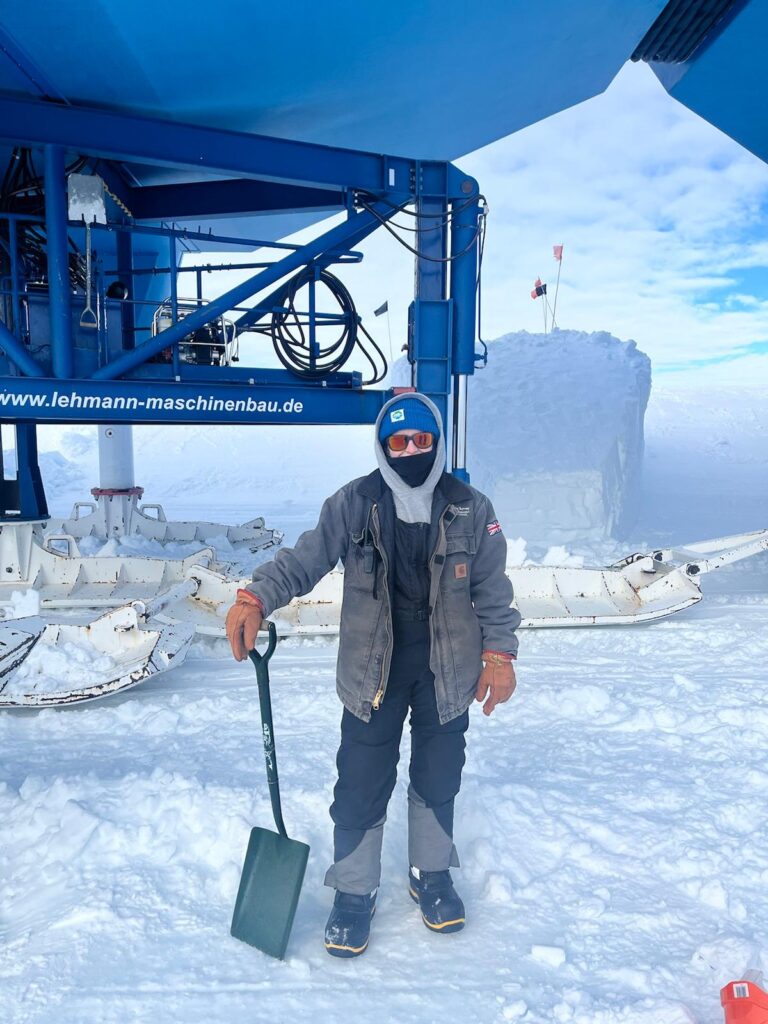
And finally…. thank-you!
We’ve reached the end of our epic journey around Antarctica. Thank-you to all of you for coming along for the journey – we hope you’ve enjoyed it!
We also want to say a huge thank-you to the Foreign, Commonwealth and Development Office and the Royal Geographical Society, who have helped us bring Antarctica to all of you.
And if you want to keep following the adventures of the ordinary people living in this extraordinary place, you can follow British Antarctic Survey on:
You can listen to our podcasts Iceworld (all about life on the ice) and Beyond the Ice (bringing you expert opinion on polar science). Or, if you want to deep-dive into some of our stories, check out our Long Read series.